
If you share your home with a large or giant breed dog, there is a good chance that joint health is already on your radar — or it should be. Breeds such as German Shepherds, Golden Retrievers, Labrador Retrievers, Great Danes, Rottweilers, and Bernese Mountain Dogs carry significantly more body weight on every stride than their smaller counterparts, and that extra load puts tremendous stress on cartilage, ligaments, and synovial fluid over a lifetime. According to veterinary orthopedic research, roughly 20 percent of dogs over one year of age show clinical signs of osteoarthritis, and that figure climbs sharply in large and giant breeds, where hip dysplasia, elbow dysplasia, and cruciate ligament issues are alarmingly common.
Joint supplements have become one of the most widely recommended preventive and supportive tools in canine healthcare. Ingredients like glucosamine, chondroitin sulfate, MSM (methylsulfonylmethane), and omega-3 fatty acids work together to support cartilage repair, reduce inflammation, and maintain the viscosity of synovial fluid that cushions joints during movement. The best joint supplement for large dogs delivers clinically researched doses of these compounds in a palatable format your dog will actually eat — day after day, month after month — because consistency is the single biggest factor in whether a supplement delivers results.
We spent more than 60 hours researching formulations, analyzing ingredient labels, reading veterinary literature, and collecting feedback from large-breed owners across forums and breed-specific communities. The result is this comprehensive guide: five top-rated joint supplements that have earned their reputations through transparent ingredient sourcing, appropriate dosing for big dogs, and real-world results. Whether your dog is a young athlete you want to protect proactively or a senior who already shows signs of stiffness, there is an option here for you.
Table of Contents
Quick Picks: Top 5 Joint Supplements for Large Dogs
| Product | Award | Key Ingredients | Form | Best For |
|---|---|---|---|---|
| Nutramax Cosequin DS Plus MSM | Best Overall | Glucosamine, Chondroitin, MSM | Chewable Tablet | All-around joint support |
| Zesty Paws Mobility Bites | Best Soft Chew | Glucosamine, Chondroitin, MSM, Hemp | Soft Chew | Picky eaters |
| VetriScience GlycoFlex 3 | Best Maximum Strength | Glucosamine, MSM, DMG, Perna | Soft Chew | Advanced joint issues |
| PetHonesty Hip & Joint Health | Best Natural Formula | Glucosamine, Turmeric, Hemp Oil | Soft Chew | Natural/holistic approach |
| Doggie Dailies Glucosamine Chews | Best Budget | Glucosamine, Chondroitin, MSM, CoQ10 | Soft Chew | Budget-friendly daily use |
Joint Supplement Buying Guide for Large Dogs
Before diving into individual product reviews, it helps to understand what is happening inside your large dog’s joints, which ingredients actually have clinical evidence behind them, and how to choose the right delivery format. This buying guide section covers all of that so you can shop with confidence.
Why Large Breeds Are Prone to Joint Problems
Large and giant breed dogs face a perfect storm of factors that conspire against long-term joint health. The first and most obvious factor is body weight. A 90-pound Labrador Retriever exerts four to five times its body weight through each front leg with every stride at a trot. That is roughly 360 to 450 pounds of force passing through relatively small joint surfaces thousands of times on a single walk. Over the course of a lifetime, that repetitive loading wears down articular cartilage — the smooth, rubbery tissue that allows bones to glide against one another without friction.
Beyond raw weight, large breeds are genetically predisposed to developmental orthopedic conditions. Hip dysplasia, in which the ball-and-socket joint of the hip is malformed, affects up to 70 percent of certain breeds such as Bulldogs, Saint Bernards, and Newfoundlands. Elbow dysplasia, a constellation of developmental abnormalities in the elbow joint, is endemic in breeds like Bernese Mountain Dogs, German Shepherds, and Rottweilers. These conformational issues create abnormal wear patterns that accelerate cartilage loss and trigger chronic inflammatory cascades.
Growth rate also plays a role. Large breed puppies grow incredibly fast during their first 12 to 18 months, and any nutritional imbalance, excessive caloric intake, or over-exercise during that developmental window can set the stage for lifelong joint problems. This is why many veterinarians now recommend starting joint-supportive nutrition early — not waiting until your dog is limping.
Finally, there is the matter of lifespan and aging. While large dogs tend to live shorter lives than small breeds (8 to 12 years versus 14 to 18), their joints age faster in proportion. A seven-year-old Great Dane is geriatric, and by that age, the cumulative damage to cartilage, synovial membranes, and subchondral bone is often significant. Supplementation can help slow that progression and keep your dog comfortable and active for as long as possible.
Key Ingredients in Joint Supplements (Glucosamine, Chondroitin, MSM, Omega-3s)
Glucosamine Hydrochloride (HCl) is the backbone of most canine joint supplements and for good reason. Glucosamine is a naturally occurring amino sugar that serves as a building block for glycosaminoglycans (GAGs), which are essential structural components of cartilage and synovial fluid. When given as a supplement, glucosamine HCl provides the raw materials the body needs to repair damaged cartilage and maintain joint lubrication. Veterinary studies have demonstrated that glucosamine supplementation can reduce clinical signs of osteoarthritis and slow cartilage degradation when administered at appropriate doses — generally 20 mg per pound of body weight per day for dogs. For a 75-pound dog, that translates to about 1,500 mg daily.
Chondroitin Sulfate works synergistically with glucosamine. It is a large molecule found naturally in cartilage that helps attract and retain water, giving cartilage its critical ability to resist compression. Chondroitin also inhibits destructive enzymes (matrix metalloproteinases) that break down cartilage during inflammation. Most clinical research on joint supplementation in dogs uses glucosamine and chondroitin together, and the results suggest the combination is more effective than either ingredient alone. Typical dosing is around 5 to 10 mg per pound of body weight per day.
MSM (Methylsulfonylmethane) is an organic sulfur compound with well-documented anti-inflammatory and analgesic properties. Sulfur is a critical building block for connective tissue, including cartilage, tendons, and ligaments. MSM supplementation has been shown in both human and animal studies to reduce joint pain and swelling, making it a natural complement to glucosamine and chondroitin. You will find it in the majority of top-tier joint supplements because it addresses the pain and inflammation side of the equation while glucosamine and chondroitin handle the structural repair.
Omega-3 Fatty Acids (EPA and DHA) derived from fish oil or green-lipped mussel are powerful anti-inflammatory agents. Unlike NSAIDs, which block specific inflammatory enzymes but can cause gastrointestinal and renal side effects, omega-3 fatty acids modulate inflammation through multiple pathways and have an excellent long-term safety profile. EPA (eicosapentaenoic acid) in particular has been shown to reduce the production of pro-inflammatory cytokines in arthritic joints. Many premium joint supplements now include omega-3 sources as part of a comprehensive joint-support formula.
Other Notable Ingredients: Some supplements include additional compounds worth knowing about. Green-lipped mussel (Perna canaliculus) is a unique mollusk from New Zealand that contains a proprietary blend of omega-3s, GAGs, and other bioactive compounds with strong anti-inflammatory activity. Turmeric (curcumin) is a plant-based anti-inflammatory that has gained popularity in both human and veterinary medicine. Hyaluronic acid helps maintain synovial fluid viscosity. Vitamin E and vitamin C serve as antioxidants that protect joint tissues from oxidative damage. CoQ10 (coenzyme Q10) supports cellular energy production in aging tissues.
When to Start Joint Supplements
One of the most common questions large dog owners ask is, “When should I start giving my dog a joint supplement?” The answer has shifted significantly over the past decade. Traditional veterinary guidance was to begin supplementation once a dog showed clinical signs of arthritis — limping, stiffness after rest, reluctance to jump or climb stairs. However, the current consensus among veterinary orthopedic specialists increasingly favors a proactive approach.
For large and giant breeds, many veterinarians now recommend starting glucosamine and chondroitin supplementation between 12 and 24 months of age, once the dog has finished its major growth phase. The reasoning is straightforward: by the time a large breed dog shows visible lameness, the cartilage damage is already substantial. X-rays of clinically lame dogs typically reveal advanced cartilage thinning, osteophyte formation (bone spurs), and subchondral bone sclerosis that took years to develop. Starting supplementation early aims to slow that degenerative process before it becomes symptomatic.
For dogs with known risk factors — breeds with high rates of hip or elbow dysplasia, dogs from parents with documented joint disease, or dogs that will work in high-impact activities like agility, dock diving, or field work — some veterinary practitioners recommend beginning supplementation even earlier, around 10 to 12 months. Always discuss timing with your own veterinarian, especially if your dog has any health conditions or is on other medications.
For senior dogs already showing signs of joint discomfort, it is never too late to start. Most owners report noticeable improvements in mobility and energy within four to eight weeks of consistent supplementation, though some dogs respond within two weeks. The key word is consistency — joint supplements are not painkillers that work on demand. They require daily, ongoing administration to build up and maintain their effects.
Chews vs Powders vs Liquids
Joint supplements come in three main delivery formats, each with trade-offs that matter depending on your dog and your lifestyle.
Soft Chews are by far the most popular format and for good reason. They are easy to administer because most dogs treat them as a daily snack. Flavored with chicken, bacon, or peanut butter, soft chews have high palatability scores, which means better owner compliance. The downside is that chews often contain fillers, binders, and sweeteners to maintain their shape and taste. Some sensitive dogs may experience digestive upset from these inactive ingredients. Additionally, soft chews have a limited shelf life compared to tablets and can become hard or stale in humid environments.
Chewable Tablets are a step between soft chews and traditional pills. They are often more concentrated than soft chews, meaning fewer tablets per day to reach therapeutic doses. Tablets have a longer shelf life and generally fewer fillers. The trade-off is palatability — some dogs refuse tablets unless they are wrapped in cheese or a pill pocket. Products like Cosequin DS have developed tablet formulations that most dogs accept readily, but it varies by individual.
Powders are versatile and typically offer the best value per milligram of active ingredients. You simply sprinkle the powder over your dog’s food. Powders are ideal for dogs that refuse chews or tablets, and they allow precise dose adjustments for dogs that fall between standard weight ranges. The downside is the mess factor and the possibility that picky eaters will notice the taste or texture change in their food and refuse to eat.
Liquids are the least common format for joint supplements, but they have their advocates. Liquid supplements are absorbed slightly faster than solid formats, and they are easy to mix into wet food. However, they tend to be more expensive per dose, require refrigeration after opening, and have the shortest shelf life. Measuring and pouring a liquid supplement daily can also be less convenient than tossing your dog a chew.
For most large dog owners, soft chews or chewable tablets strike the best balance of convenience, palatability, and potency. If your dog is a particularly picky eater, a powder mixed into wet food is a reliable fallback.
What Veterinarians Recommend
It is worth noting that the veterinary supplement market is not regulated with the same rigor as pharmaceuticals. The FDA does not require supplement manufacturers to prove efficacy before bringing a product to market, which means quality varies wildly. Veterinarians generally recommend looking for products that meet one or more of the following criteria.
NASC (National Animal Supplement Council) Quality Seal: This voluntary certification indicates that the manufacturer follows Good Manufacturing Practices, maintains adverse event reporting, and submits to random facility audits. All five products in our roundup carry the NASC seal or meet equivalent quality standards. If a supplement does not have the NASC seal, that is not automatically disqualifying, but it means you are relying entirely on the manufacturer’s word regarding quality control.
Published Clinical Research: Products like Cosequin and GlycoFlex have peer-reviewed studies supporting their efficacy in dogs. While published research is not common in the supplement world, it does provide an added layer of confidence. Ask your veterinarian if they are familiar with any research on a product you are considering.
Transparent Labeling: A quality supplement lists the exact amount of every active ingredient per serving. Beware of products that use proprietary blends where individual ingredient amounts are hidden behind a combined total. If a supplement claims to contain glucosamine but does not tell you how many milligrams per chew, you cannot verify that the dose is therapeutic.
Appropriate Dosing for Large Dogs: This is a critical detail that many owners overlook. Some supplements marketed for all dog sizes only provide adequate doses for small dogs, requiring you to give your 80-pound Lab four or five chews per day to reach therapeutic levels. The best joint supplement for large dogs provides a meaningful dose in one or two chews. Check the milligrams per serving against the general guidelines: approximately 1,000 to 1,500 mg glucosamine and 400 to 800 mg chondroitin per day for a large breed dog.
Most veterinarians will also note that supplements work best as part of a comprehensive joint-health strategy that includes weight management, regular low-impact exercise (swimming is excellent), appropriate nutrition for large breeds, and, when necessary, prescription pain management. Supplements are not a replacement for veterinary care, but they are a valuable piece of the puzzle.
In-Depth Product Reviews
Nutramax Cosequin DS Plus MSM — Best Overall
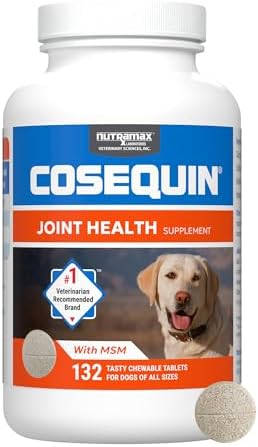
When veterinarians recommend a joint supplement by name, Nutramax Cosequin is almost always the first product they mention. This is not marketing hype — it is earned credibility built over two decades of published clinical studies, consistent manufacturing quality, and real-world results in millions of dogs. Cosequin DS Plus MSM is the “double strength” formulation with added methylsulfonylmethane, specifically designed for dogs that need a higher dose of active ingredients, which makes it an ideal fit for large and giant breeds.
The formula centers on three clinically proven ingredients: glucosamine hydrochloride (500 mg per chewable tablet), sodium chondroitin sulfate (400 mg), and MSM (250 mg). For a large dog in the 60- to 100-pound range, the initial loading phase calls for three tablets per day for the first four to six weeks, dropping to a maintenance dose of one to two tablets daily thereafter. At the loading dose, your dog receives 1,500 mg glucosamine, 1,200 mg chondroitin, and 750 mg MSM per day — squarely within the therapeutic ranges supported by veterinary research.
What sets Cosequin apart from most competitors is the depth of its scientific backing. Nutramax Laboratories has funded multiple controlled studies demonstrating that Cosequin supplementation reduces lameness scores, increases mobility, and protects cartilage integrity in dogs with osteoarthritis. The company also manufactures to pharmaceutical-grade standards (cGMP) in its own facilities, conducts batch-by-batch testing to verify potency and purity, and carries the NASC Quality Seal. In a market flooded with unverified claims, Cosequin provides an unusual level of transparency and accountability.
Palatability is solid for a chewable tablet format. Most large dogs accept Cosequin tablets readily when offered as a treat or mixed into food. Some very picky dogs may need the tablet hidden in a pill pocket or piece of cheese, but owner reviews consistently report high acceptance rates. The tablets are scored for easy breaking if you ever need to adjust the dose.
Key Specifications
- Active Ingredients per Tablet: Glucosamine HCl 500 mg, Chondroitin Sulfate 400 mg, MSM 250 mg
- Format: Chewable Tablet
- Count: 60, 120, or 180 tablets
- Recommended Dose (Large Dogs): 2–3 tablets/day loading; 1–2 tablets/day maintenance
- Made In: USA
- Quality Certifications: NASC, cGMP manufactured
- Most extensively researched canine joint supplement on the market
- Veterinarian recommended — number one brand used in clinics nationwide
- High per-tablet concentration of glucosamine, chondroitin, and MSM
- Manufactured in-house under pharmaceutical-grade quality control
- Carries the NASC Quality Seal
- Available in multiple count options for cost savings on bulk purchases
- Tablet format is less palatable than flavored soft chews for some dogs
- Does not contain omega-3 fatty acids — consider adding a separate fish oil supplement
- Higher per-day cost than some budget options at the loading dose
- Loading phase requires three tablets daily, which means you go through the bottle faster initially
Bottom Line: Nutramax Cosequin DS Plus MSM is the gold standard for canine joint supplementation, backed by more published research than any competitor. If you want one supplement you can trust for your large breed dog’s long-term joint health, this is it. The combination of clinical evidence, transparent manufacturing, and veterinary endorsement makes it our top overall pick. It lacks omega-3s, so you may want to add a fish oil supplement alongside it for comprehensive joint support.
Zesty Paws Mobility Bites — Best Soft Chew

Zesty Paws has built a reputation as one of the most popular pet supplement brands in America, and their Mobility Bites are a big reason why. These duck-flavored soft chews deliver a comprehensive joint-support formula that includes glucosamine, chondroitin, MSM, and the added benefits of hemp seed oil and OptiMSM (a branded, purified form of MSM). For owners who struggle to get their large dogs to swallow tablets, these chews are often the answer — most dogs wolf them down like treats.
Each chew provides 400 mg of glucosamine HCl, 50 mg of chondroitin sulfate, and 200 mg of OptiMSM. For large dogs (over 75 pounds), the recommended dose is two chews per day, which delivers 800 mg glucosamine, 100 mg chondroitin, and 400 mg MSM. The glucosamine dose is respectable but falls a bit short of the 1,500 mg daily target that some veterinary guidelines suggest for large breeds. The chondroitin dose is notably lower than what you get from Cosequin. However, Zesty Paws compensates with additional ingredients not found in many competitors: hemp seed oil for its anti-inflammatory properties, vitamin E, and vitamin C as antioxidant support.
Palatability is the standout feature here. Zesty Paws uses a duck-flavored base that dogs absolutely love, and the soft, chewy texture makes these feel like treats rather than medicine. Owner reviews consistently rate taste acceptance at 90 percent or higher, even among notoriously picky breeds. For dogs that flat-out refuse tablets, this palatability advantage translates directly into better compliance and, ultimately, better outcomes.
The product is manufactured in the USA in an FDA-registered, GMP-certified facility, and Zesty Paws holds the NASC Quality Seal. The company has grown rapidly and invested in quality infrastructure, though it does not have the same depth of brand-specific clinical research as Nutramax. That said, all of the individual ingredients in Mobility Bites are well-supported by veterinary science.
Key Specifications
- Active Ingredients per Chew: Glucosamine HCl 400 mg, Chondroitin Sulfate 50 mg, OptiMSM 200 mg, Hemp Seed Oil, Vitamin C, Vitamin E
- Format: Soft Chew (Duck Flavor)
- Count: 90 soft chews
- Recommended Dose (Large Dogs): 2 chews/day
- Made In: USA
- Quality Certifications: NASC, GMP facility
- Exceptional palatability — most dogs treat these as a snack
- Includes hemp seed oil, vitamin C, and vitamin E for added anti-inflammatory and antioxidant support
- OptiMSM is a purified, branded form of MSM with verified potency
- Soft chew format is easy to administer with no pill-hiding tricks needed
- NASC Quality Seal and GMP-certified manufacturing
- One of the most affordable premium soft chew options
- Glucosamine dose per chew (400 mg) is lower than Cosequin — two chews deliver 800 mg, short of the ideal 1,500 mg for large dogs
- Chondroitin dose (50 mg per chew) is significantly lower than clinical guidelines recommend
- Contains inactive ingredients (fillers, flavoring agents) that may cause digestive issues in sensitive dogs
- Soft chews can become sticky or hard if stored in warm or humid conditions
Bottom Line: Zesty Paws Mobility Bites are the best soft chew option for large breed owners who prioritize palatability and ease of administration. Your dog will actually look forward to taking these every day, which solves the number-one problem with supplementation: compliance. The glucosamine and chondroitin doses are lower than our top pick, so owners of very large breeds (90+ pounds) with advanced joint issues may want a more concentrated formula. But for general joint maintenance and prevention, these are excellent.
VetriScience GlycoFlex 3 — Best Maximum Strength

VetriScience GlycoFlex 3 represents the most aggressive joint-support formula in our roundup, engineered specifically for dogs with moderate to advanced joint deterioration. The “3” in the name refers to its position as the third and highest tier in VetriScience’s staged joint-support system (GlycoFlex 1 for young dogs, GlycoFlex 2 for moderate needs, GlycoFlex 3 for maximum support). If your large breed dog is already showing clear signs of joint discomfort — difficulty rising, reluctance to walk or play, audible clicking in joints, visible stiffness — GlycoFlex 3 is purpose-built for that situation.
The formula is anchored by 1,000 mg of glucosamine HCl per chew, which is double what most competitors offer. It also includes 250 mg of MSM, 600 mg of DMG (dimethylglycine, which supports immune function and oxygen utilization in tissues), and 600 mg of Perna canaliculus (green-lipped mussel), a New Zealand mollusk that contains a unique profile of omega-3 fatty acids, glycosaminoglycans, and anti-inflammatory compounds. For large dogs over 60 pounds, the dose is two chews daily, delivering 2,000 mg glucosamine, 500 mg MSM, 1,200 mg DMG, and 1,200 mg Perna — a potent therapeutic combination.
VetriScience is a brand with deep roots in veterinary medicine. The company was founded by a veterinarian and has been producing animal supplements for more than 40 years. GlycoFlex products are used in veterinary clinics and rehabilitation centers across the country, and the GlycoFlex line has been the subject of published clinical research. A notable study at the University of Connecticut demonstrated significant improvements in hind-limb strength and mobility in dogs receiving GlycoFlex 3 over a period of just eight weeks.
The chicken-liver-flavored bite-sized chews are well-accepted by most dogs, though some owners note that extremely picky eaters may hesitate at first. The chews are relatively large, which is actually an advantage for big dogs — they feel substantial and are easy to handle. Each bag contains 120 chews, which provides a 60-day supply for large breeds at the recommended two-chew daily dose.
Key Specifications
- Active Ingredients per Chew: Glucosamine HCl 1,000 mg, MSM 250 mg, DMG 600 mg, Perna Canaliculus 600 mg, Manganese 5 mg, Vitamin E 100 IU
- Format: Bite-Sized Chew (Chicken Liver Flavor)
- Count: 120 chews
- Recommended Dose (Large Dogs): 2 chews/day
- Made In: USA
- Quality Certifications: NASC, Veterinarian formulated
- Highest glucosamine dose per chew (1,000 mg) of any product in this roundup
- Includes Perna canaliculus (green-lipped mussel) for natural anti-inflammatory omega-3s
- DMG supports cellular energy and immune function in aging joints
- Supported by published clinical research demonstrating measurable mobility improvements
- Formulated by veterinarians with over 40 years of expertise in animal supplementation
- 120-chew bag provides a full 60-day supply for large breeds
- Does not contain chondroitin sulfate, which is a notable omission given its synergy with glucosamine
- Higher price point than standard joint supplements — you pay more for the maximum-strength formula
- Some dogs may need a transition period to accept the chicken liver flavor
- DMG is a less mainstream ingredient with limited independent research specific to joint health in dogs
Bottom Line: VetriScience GlycoFlex 3 is the heavy hitter of canine joint supplements, designed for large breed dogs with significant joint issues who need maximum-strength support. The 1,000 mg glucosamine per chew, combined with green-lipped mussel and DMG, delivers a clinically meaningful therapeutic dose that goes beyond basic maintenance. The absence of chondroitin is a surprising gap, but the inclusion of Perna canaliculus largely compensates with its own GAG content and anti-inflammatory properties. If your dog’s joints need serious help, this is the formula to consider.
PetHonesty Hip & Joint Health — Best Natural Formula

PetHonesty has carved out a loyal following among dog owners who value transparency, natural ingredients, and a clean-label philosophy. Their Hip & Joint Health soft chews reflect that ethos with a formula that pairs traditional joint-support compounds (glucosamine and MSM) with powerful natural anti-inflammatories like turmeric and hemp oil. If you prefer a holistic approach to your large dog’s joint care — one that leans on plant-based anti-inflammatories alongside the standard structural-support ingredients — PetHonesty is your best match.
Each chew delivers glucosamine HCl, MSM, turmeric (standardized for curcumin content), hemp seed oil, and a proprietary blend of other joint-supportive compounds. The turmeric inclusion is particularly noteworthy. Curcumin, the active compound in turmeric, has been the subject of hundreds of peer-reviewed studies demonstrating potent anti-inflammatory and antioxidant properties. While most of that research is in humans, veterinary interest in curcumin for canine osteoarthritis has grown rapidly, and early canine studies are promising. Hemp seed oil provides omega-3 and omega-6 fatty acids along with naturally occurring anti-inflammatory terpenes.
For large dogs over 50 pounds, the recommended dose is two chews per day. The chews themselves are made with real chicken flavor, and PetHonesty reports that over 90 percent of dogs accept them without any coaxing. The ingredient list avoids wheat, corn, soy, and artificial preservatives, which is a significant plus for dogs with food sensitivities or allergies — a common concern in large breeds like German Shepherds and Golden Retrievers.
PetHonesty manufactures in the USA in a GMP-certified facility and undergoes third-party testing for purity and potency. The brand carries the NASC Quality Seal and has built a strong reputation for responsive customer service and a satisfaction guarantee. One area where PetHonesty falls short compared to the top two picks is the lack of published brand-specific clinical studies. The individual ingredients are well-researched, but the specific formula has not been tested in a controlled clinical setting.
Key Specifications
- Active Ingredients per Chew: Glucosamine HCl, MSM, Turmeric (Curcumin), Hemp Seed Oil, Vitamin E
- Format: Soft Chew (Chicken Flavor)
- Count: 90 soft chews
- Recommended Dose (Large Dogs): 2 chews/day
- Made In: USA
- Quality Certifications: NASC, GMP, Third-party tested
- Includes turmeric (curcumin) for powerful natural anti-inflammatory support
- Hemp seed oil provides omega fatty acids and anti-inflammatory terpenes
- Free from wheat, corn, soy, and artificial preservatives — ideal for dogs with sensitivities
- High palatability with real chicken flavor
- NASC Quality Seal and third-party tested for purity
- Clean-label philosophy with transparent ingredient sourcing
- Does not include chondroitin sulfate, which limits the structural repair component of the formula
- Exact milligram amounts per ingredient are not always clearly listed on packaging
- No brand-specific clinical studies — relying on research for individual ingredients
- Hemp oil content may concern some owners despite being legal, non-psychoactive, and safe
Bottom Line: PetHonesty Hip & Joint Health is the ideal choice for large dog owners who want a more natural, holistic approach to joint support. The combination of glucosamine, MSM, turmeric, and hemp oil covers both the structural and inflammatory aspects of joint health, and the allergen-friendly formulation makes it a standout for dogs with food sensitivities. The lack of chondroitin and the less-detailed ingredient labeling are drawbacks, but the overall quality and philosophy of this product earn it a strong recommendation.
Doggie Dailies Glucosamine Chews — Best Budget
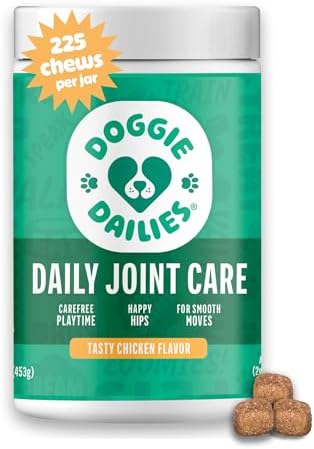
Not every large dog owner can justify spending $40 to $60 per month on a premium joint supplement, and that is perfectly understandable. Doggie Dailies Glucosamine Chews deliver a surprisingly comprehensive formula at a fraction of the cost, making consistent daily supplementation accessible to a much wider audience. When budget constraints threaten to derail a supplementation regimen entirely, Doggie Dailies provides a meaningful middle ground between doing nothing and investing in a top-shelf product.
Each soft chew contains glucosamine HCl, chondroitin sulfate, MSM, and CoQ10 (coenzyme Q10). The inclusion of all four compounds in a budget product is notable — many inexpensive supplements cut corners by omitting chondroitin (the most expensive ingredient) or reducing it to token amounts. Doggie Dailies keeps chondroitin in the formula, and the addition of CoQ10 provides antioxidant and cellular energy support that is especially beneficial for aging dogs. The per-chew dosages are moderate, and large dogs will need the higher end of the recommended dosing range to reach therapeutic levels.
With 225 chews per bag and a recommended dose of two chews per day for large dogs, one bag lasts approximately 112 days — nearly four months. That extended supply, combined with the lower price point, makes Doggie Dailies one of the most cost-effective joint supplements on the market when measured on a per-day basis. For owners managing multi-dog households or those on fixed incomes, that affordability is genuinely meaningful.
Taste acceptance is high. The chews are duck-flavored and soft-textured, and most dogs accept them eagerly. The product is manufactured in the USA in a GMP-compliant facility and carries the NASC Quality Seal. Doggie Dailies has built a substantial base of positive reviews across major retailers, with many large-breed owners reporting noticeable improvements in their dogs’ mobility and energy levels after four to six weeks of daily use.
Key Specifications
- Active Ingredients per Chew: Glucosamine HCl, Chondroitin Sulfate, MSM, CoQ10, Vitamin E
- Format: Soft Chew (Duck Flavor)
- Count: 225 soft chews
- Recommended Dose (Large Dogs): 2 chews/day
- Made In: USA
- Quality Certifications: NASC, GMP facility
- Exceptional value — 225-count bag lasts nearly four months for large dogs
- Includes all four key joint ingredients: glucosamine, chondroitin, MSM, and CoQ10
- Duck-flavored soft chew format with high taste acceptance
- NASC Quality Seal and GMP-manufactured in the USA
- Makes consistent daily supplementation affordable for budget-conscious owners
- Strong track record of positive reviews from large-breed owners
- Per-chew ingredient concentrations are lower than premium competitors
- Exact milligram amounts per active ingredient could be more transparent on the label
- Not backed by brand-specific clinical studies
- May not provide sufficient therapeutic dosing for dogs with advanced joint disease
Bottom Line: Doggie Dailies Glucosamine Chews prove that effective joint supplementation does not have to break the bank. With all four core joint-support ingredients, a generous 225-count bag, and a palatable soft chew format, this product is the best value option for large breed owners. It may not deliver the same per-dose potency as Cosequin or GlycoFlex 3, but for preventive maintenance and mild to moderate joint support, it gets the job done at a price that ensures you will actually stick with it month after month. Consistency matters more than potency when it comes to supplements, and affordability drives consistency.
Side-by-Side Comparison Table
| Feature | Cosequin DS Plus MSM | Zesty Paws Mobility Bites | VetriScience GlycoFlex 3 | PetHonesty Hip & Joint | Doggie Dailies |
|---|---|---|---|---|---|
| Award | Best Overall | Best Soft Chew | Best Max Strength | Best Natural Formula | Best Budget |
| Glucosamine per Serving | 500 mg/tablet | 400 mg/chew | 1,000 mg/chew | Not specified per chew | Not specified per chew |
| Chondroitin | 400 mg/tablet | 50 mg/chew | Not included | Not included | Included |
| MSM | 250 mg/tablet | 200 mg/chew (OptiMSM) | 250 mg/chew | Included | Included |
| Unique Ingredients | — | Hemp Seed Oil, Vitamins C & E | Perna Canaliculus, DMG | Turmeric, Hemp Oil | CoQ10 |
| Format | Chewable Tablet | Soft Chew | Bite-Sized Chew | Soft Chew | Soft Chew |
| Large Dog Dose | 2–3 tablets/day | 2 chews/day | 2 chews/day | 2 chews/day | 2 chews/day |
| Count | 60–180 | 90 | 120 | 90 | 225 |
| Palatability | Good | Excellent | Good | Excellent | Very Good |
| Clinical Research | Yes (published studies) | Individual ingredients only | Yes (published studies) | Individual ingredients only | Individual ingredients only |
| NASC Seal | Yes | Yes | Yes | Yes | Yes |
| Best For | All-around joint support with clinical backing | Picky eaters, daily prevention | Advanced joint issues, rehab | Holistic/natural approach | Budget-friendly daily use |
Frequently Asked Questions
How long does it take for joint supplements to work in dogs?
Most veterinarians and supplement manufacturers advise owners to expect a four- to eight-week window before seeing noticeable improvements in mobility, comfort, and energy levels. Some dogs respond faster — within two to three weeks — while others with more advanced joint degeneration may take up to 12 weeks to show clear benefits. Joint supplements work by gradually rebuilding cartilage matrix components and reducing chronic inflammation, so consistency is critical. Unlike painkillers, which provide immediate relief, supplements require daily administration over weeks to reach their full effect. Do not give up after just one or two weeks.
What is the correct glucosamine dosage for large dogs?
The generally accepted veterinary guideline for glucosamine supplementation in dogs is approximately 20 mg per pound of body weight per day. For a 75-pound dog, that translates to about 1,500 mg daily. For a 100-pound dog, the target is approximately 2,000 mg per day. Many products use a loading phase (higher dose for the first four to six weeks) followed by a lower maintenance dose. Always follow the specific dosing instructions on your chosen product, and consult your veterinarian if your dog has kidney disease, diabetes, or bleeding disorders, as glucosamine can interact with certain conditions.
Can I give my puppy joint supplements?
Most veterinarians recommend waiting until a large breed puppy is at least 10 to 12 months old before starting joint supplements, as the growth plates need to close and the skeletal system should be approaching maturity. However, some veterinarians may recommend early supplementation for puppies from lines with a high incidence of hip or elbow dysplasia. If you are considering joint supplements for a puppy, always consult your veterinarian first. In the meantime, focus on feeding an appropriate large-breed puppy food that supports controlled growth, maintaining a healthy body weight, and avoiding high-impact exercise on hard surfaces during the critical growth phase.
Are there side effects of glucosamine and chondroitin for dogs?
Glucosamine and chondroitin supplements are generally considered very safe for dogs, with few reported side effects. The most common adverse reactions are mild gastrointestinal issues such as soft stools, gas, or decreased appetite, particularly during the first few days of supplementation. These symptoms typically resolve on their own as the dog adjusts. In rare cases, glucosamine may affect blood sugar levels in diabetic dogs or increase bleeding risk in dogs taking blood-thinning medications. If your dog has any pre-existing health conditions or takes prescription medications, consult your veterinarian before starting a joint supplement to rule out potential interactions.
Can I give my dog a human glucosamine supplement instead?
While the glucosamine molecule itself is the same whether it is in a human or canine product, veterinarians strongly advise against giving your dog human-grade glucosamine supplements. Human formulations often contain additional ingredients — such as xylitol (an artificial sweetener that is extremely toxic to dogs), higher concentrations of certain herbs, or added pain relievers like acetaminophen or ibuprofen — that can be harmful or even fatal to dogs. Canine-specific supplements are formulated with dog-safe inactive ingredients, appropriate dosing guidelines by weight, and flavors that encourage daily compliance. The small cost difference is not worth the risk.
Do joint supplements replace veterinary treatment for arthritis?
No. Joint supplements are a supportive tool, not a replacement for proper veterinary diagnosis and treatment. If your dog is showing signs of significant joint pain — persistent limping, crying when getting up, refusal to exercise, or visible swelling in joints — you should see your veterinarian for a thorough orthopedic examination and potentially X-rays. Your vet may recommend prescription anti-inflammatory medications (NSAIDs), physical rehabilitation, weight management, laser therapy, or in severe cases, surgical intervention. Joint supplements work best as part of a comprehensive treatment plan that may include several of these modalities. They help support ongoing joint health and may reduce the amount of prescription medication needed, but they are not a standalone treatment for clinical arthritis.
Final Thoughts: Choosing the Best Joint Supplement for Your Large Dog
Joint health is not optional for large breed dogs — it is a fundamental component of quality of life that deserves proactive attention from the very first year. Whether your dog is a young, active athlete that you want to protect from future problems or a senior who is already slowing down, the right joint supplement can make a meaningful difference in comfort, mobility, and overall happiness.
If we had to choose one product for a large breed dog, it would be Nutramax Cosequin DS Plus MSM. Its combination of clinical research, veterinary endorsement, potent ingredient doses, and pharmaceutical-grade manufacturing make it the most trustworthy option on the market. For dogs with advanced joint issues, VetriScience GlycoFlex 3 delivers maximum-strength support with its industry-leading 1,000 mg glucosamine per chew and unique green-lipped mussel inclusion.
If palatability is your primary concern — and it is a legitimate one because a supplement only works if your dog actually takes it — Zesty Paws Mobility Bites are the clear winner. For a natural, holistic approach, PetHonesty Hip & Joint Health stands out with its turmeric and hemp oil combination. And if your budget is tight, Doggie Dailies Glucosamine Chews proves that you do not have to spend a fortune to give your dog meaningful joint support.
Beyond supplementation, remember that joint health is a multi-faceted commitment. Keep your large dog at a lean, healthy body weight — every extra pound multiplies the force on those joints. Provide regular, low-impact exercise like leash walks and swimming rather than repetitive high-impact activities. Invest in an orthopedic dog bed that supports your dog’s joints during the 12 to 14 hours a day they spend sleeping and resting. If your dog has mobility challenges getting into the car or onto the couch, a quality ramp designed for large dogs can reduce the impact of jumping on already-stressed joints. And feed a high-quality diet formulated for large breeds that provides the foundational nutrition joints need to repair and maintain themselves.
Your large dog depends on you to make decisions today that will determine their comfort and mobility for years to come. Starting a joint supplement — and sticking with it consistently — is one of the most impactful things you can do. Pick the product that fits your dog’s needs and your budget, and commit to the routine. Your dog’s future self will thank you on every walk, every game of fetch, and every morning they spring up from their bed without hesitation.
Affiliate Disclosure: Large Dog Lab is a participant in the Amazon Services LLC Associates Program, an affiliate advertising program designed to provide a means for sites to earn advertising fees by advertising and linking to Amazon.com. When you purchase through our links, we may earn a small commission at no additional cost to you. This helps us continue providing free, in-depth content for large dog owners. We only recommend products we believe in.