
Feeding a large breed dog is not as simple as pouring a bigger scoop of whatever kibble is on sale at the grocery store. Dogs that tip the scale at 50 pounds and above have fundamentally different nutritional requirements than their smaller counterparts. From controlled calcium-to-phosphorus ratios that protect developing joints to carefully calibrated protein levels that sustain lean muscle mass without encouraging unhealthy weight gain, every ingredient matters more when your dog eats two to four cups of food at a single sitting.
After spending months researching veterinary nutrition studies, interviewing canine nutrition consultants, and testing dozens of formulas with a panel of large and giant breed dogs ranging from Labrador Retrievers and German Shepherds to Great Danes and Saint Bernards, we put together this definitive guide to the best dog food for large breeds available in 2026. Whether you have a rambunctious large breed puppy growing at a dizzying rate or a senior gentle giant with creaky hips, you will find a formula here that fits your dog’s life stage, health needs, and your budget.
In this guide, we break down the specific nutritional science behind large breed dog food, walk you through the key ingredients to seek out (and the ones to avoid), review five top-rated formulas in detail, and answer the most common questions owners ask about feeding big dogs. By the time you finish reading, you will have the knowledge and confidence to make a smart, informed choice for your four-legged family member.
Table of Contents
- Quick Picks: Our Top 5 Large Breed Dog Foods
- Large Breed Dog Food Buying Guide
- Understanding Large Breed Nutritional Needs
- Key Ingredients to Look For
- What to Avoid in Large Breed Dog Food
- Life Stage Considerations (Puppy vs Adult vs Senior)
- How Much Should You Feed a Large Breed Dog?
- In-Depth Product Reviews
- Wellness CORE Large Breed Adult — Best Overall
- ORIJEN Large Breed Adult — Best Premium
- Royal Canin Large Breed Adult — Best Veterinarian Recommended
- Victor Purpose Nutra Pro — Best Value
- Taste of the Wild High Prairie — Best Grain-Free
- Side-by-Side Comparison Table
- Frequently Asked Questions
- Final Verdict
Quick Picks: Our Top 5 Large Breed Dog Foods
| Product | Best For | Protein | Price Range |
|---|---|---|---|
| Wellness CORE Large Breed Adult | Best Overall | 34% min | $$ |
| ORIJEN Large Breed Adult | Best Premium | 38% min | $$$ |
| Royal Canin Large Breed Adult | Best Vet Recommended | 28% min | $$ |
| Victor Purpose Nutra Pro | Best Value | 38% min | $ |
| Taste of the Wild High Prairie | Best Grain-Free | 32% min | $$ |
Large Breed Dog Food Buying Guide
Before we dive into individual product reviews, it is essential to understand what separates a genuinely good large breed dog food from one that simply has a picture of a big dog on the bag. Large breed nutrition is a well-studied area of veterinary science, and the differences between a formula designed for a Chihuahua and one engineered for a Rottweiler go far deeper than portion size. The following sections cover the five most important considerations when shopping for the best kibble for big dogs.
Understanding Large Breed Nutritional Needs
Large and giant breed dogs, generally classified as those weighing 50 pounds or more at maturity, face a unique set of metabolic and skeletal challenges that directly influence their dietary requirements. According to research published in the Journal of the American Veterinary Medical Association, large breed dogs have a slower metabolic rate per pound of body weight compared to small breeds. This means that, calorie for calorie, they need fewer calories relative to their size but more precise ratios of specific nutrients to support their massive skeletal frames and joint structures.
One of the most critical nutritional factors for large breeds is the calcium-to-phosphorus ratio. The Association of American Feed Control Officials (AAFCO) recommends a calcium content between 1.0% and 1.8% for large breed adult maintenance formulas, with a calcium-to-phosphorus ratio between 1:1 and 2:1. Excess calcium during growth, in particular, has been linked to developmental orthopedic diseases such as osteochondrosis and hypertrophic osteodystrophy in large breed puppies. A 2019 study in the Journal of Animal Science confirmed that puppies of large breeds fed high-calcium diets showed statistically significant increases in cartilage lesions compared to those on controlled-calcium formulas.
Protein is another area where large breeds have distinct needs. While all dogs require adequate protein for muscle maintenance, large breeds benefit from moderate-to-high protein levels (typically 24% to 38% on a dry matter basis) paired with controlled fat content. Too much dietary fat can lead to rapid weight gain, which places tremendous stress on joints that are already bearing a heavy load. The goal is lean muscle development without excess body fat. Many veterinary nutritionists recommend a fat content between 12% and 16% for large breed adults, though active working dogs may need slightly more.
Joint health is arguably the defining nutritional concern for large breeds. Dogs over 50 pounds are disproportionately affected by hip dysplasia, elbow dysplasia, and osteoarthritis. Quality large breed formulas often include supplemental glucosamine and chondroitin sulfate, omega-3 fatty acids (particularly EPA and DHA from fish oil), and sometimes green-lipped mussel extract. While these ingredients are not a substitute for veterinary care, multiple peer-reviewed studies have shown that dietary omega-3 supplementation can reduce inflammatory markers in canine joints and improve mobility scores in dogs with osteoarthritis.
Finally, large breed dogs are more susceptible to gastric dilatation-volvulus (bloat), a life-threatening condition where the stomach fills with gas and can twist on itself. While diet alone does not prevent bloat, several dietary factors may reduce risk. Foods that contain moderate fat, avoid excessive fermentable fiber, and include appropriately sized kibble pieces (encouraging slower eating) can all play a role in a comprehensive bloat-prevention strategy. For this reason, we also recommend checking out our guide to the best elevated dog bowls for large dogs, since feeding position is another factor many veterinarians discuss in the context of bloat prevention.
Key Ingredients to Look For
When scanning the ingredient panel on a bag of large breed dog food, there are several categories of ingredients that should catch your eye as positive indicators of quality.
Named animal proteins as the first ingredient. Look for specific protein sources such as “deboned chicken,” “fresh turkey,” “beef meal,” or “salmon.” Named protein meals (like “chicken meal”) are actually more protein-dense than fresh meat because the water has been removed, concentrating the protein. A formula that lists two or three named animal proteins in the first five ingredients is generally delivering robust protein content. Avoid vague terms like “meat meal” or “animal by-product meal,” which can vary wildly in quality and sourcing from batch to batch.
Omega-3 fatty acid sources. Fish oil, salmon oil, flaxseed, and fish meal all contribute EPA and DHA, the omega-3 fatty acids most directly linked to anti-inflammatory benefits. For large breeds prone to joint issues, these ingredients are not optional luxuries; they are functional nutritional components. Some premium formulas also include algae-derived DHA, which provides the same benefits without a fishy odor. A good target is at least 0.3% EPA and DHA combined on a dry matter basis.
Glucosamine and chondroitin. These joint-support compounds occur naturally in cartilage-rich animal ingredients like chicken meal and fish meal, but the best large breed formulas also add supplemental glucosamine hydrochloride and chondroitin sulfate. Look for guaranteed minimums on the label, ideally at least 400 mg/kg of glucosamine and 300 mg/kg of chondroitin. While the evidence for supplemental glucosamine in dogs is not as robust as in human medicine, a 2007 meta-analysis in Veterinary Therapeutics found moderate evidence supporting its use in canine osteoarthritis management.
Digestible carbohydrate sources. Large breeds are prone to digestive sensitivity, so easily digestible carbohydrates such as sweet potatoes, brown rice, oatmeal, and peas are preferable to cheap fillers like corn gluten meal or wheat middlings. Whole grains provide sustained energy and beneficial fiber, while grain-free options often substitute legumes and potatoes. If you choose a grain-inclusive formula, look for whole grains rather than grain fragments or by-products.
Probiotics and prebiotics. A healthy gut microbiome supports immune function, nutrient absorption, and even mood regulation. Many modern large breed formulas include dried fermentation products (such as Lactobacillus acidophilus or Enterococcus faecium) and prebiotic fibers like chicory root extract or dried beet pulp. These ingredients are particularly valuable for large dogs, who often have more sensitive digestive systems than smaller breeds.
Antioxidant-rich fruits and vegetables. Blueberries, spinach, cranberries, and kale are not just marketing buzzwords. They provide vitamins C and E, polyphenols, and other antioxidants that support cellular health and immune function. While dogs synthesize their own vitamin C, dietary antioxidants still contribute to overall oxidative stress management, which is especially relevant for large breeds with shorter average lifespans.
What to Avoid in Large Breed Dog Food
Just as important as knowing what to look for is understanding which ingredients and practices should raise red flags when evaluating large breed dog food options.
Artificial preservatives. BHA (butylated hydroxyanisole), BHT (butylated hydroxytoluene), and ethoxyquin have all been subjects of concern in the pet food industry. While the FDA considers them safe at current levels, many pet nutrition experts and holistic veterinarians prefer natural preservatives such as mixed tocopherols (vitamin E) and rosemary extract. All five of the products we recommend in this guide use natural preservation methods.
Artificial colors and flavors. Your dog does not care whether their kibble is red, green, or brown. Artificial colors like Red 40, Yellow 5, and Blue 2 serve no nutritional purpose and exist solely to appeal to human buyers. Some dogs with sensitive systems may react to these additives with skin irritation or digestive upset. Quality large breed formulas rely on the natural color and aroma of their ingredients.
Excessive grain fractions and fillers. Ingredients like corn gluten meal, wheat middlings, soybean hulls, and brewer’s rice (the small, broken fragments of rice kernels) are inexpensive sources of bulk but provide limited nutritional value compared to whole food ingredients. A bag that lists three or four of these fractioned grain products in its first ten ingredients is likely cutting corners on quality. While grains themselves are not inherently bad for dogs, the quality and form of the grain matters enormously.
Unnamed or vague protein sources. “Meat meal,” “animal digest,” “poultry by-product meal” without a specific species named, and “animal fat” are all indicators that the manufacturer is using variable, low-cost protein sources. This lack of specificity makes it impossible to assess quality or to identify potential allergens. Reputable brands name every protein source on their labels.
Excessive caloric density. Some performance or high-energy formulas pack 450 or more kilocalories per cup, which can lead to rapid weight gain in large breed dogs with moderate activity levels. For the average large breed pet, a caloric density between 325 and 400 kcal per cup is usually appropriate. Always check the calorie content statement on the bag and adjust portions based on your individual dog’s body condition score.
Added sugar or sweeteners. Ingredients like sucrose, corn syrup, and cane molasses are occasionally added to lower-quality dog foods to improve palatability. Dogs do not need added sugar, and it contributes empty calories that can promote obesity and dental disease. If you see sweeteners on the ingredient list, keep looking.
Life Stage Considerations (Puppy vs Adult vs Senior)
Choosing the right food for your large breed dog is not a one-time decision. As your dog moves through life stages, their nutritional needs shift significantly, and feeding the wrong formula at the wrong stage can have lasting health consequences.
Large Breed Puppies (Birth to 12-18 Months). This is arguably the most critical nutritional window for large breeds. Large breed puppies grow at an astonishing rate, sometimes gaining two to three pounds per week during peak growth periods. However, the goal is not to maximize growth speed; it is to achieve slow, steady, controlled growth that allows the skeletal system to develop properly. Large breed puppy food should contain controlled levels of calcium (typically 0.8% to 1.5%) and moderate caloric density to prevent too-rapid growth. AAFCO recognizes large breed puppy formulas as a distinct nutritional category, and products designed for this life stage will carry a statement indicating they meet AAFCO nutrient profiles for growth of large-size dogs (70 lbs or more as an adult). Never feed a regular puppy food (designed for small or all breeds) to a large breed puppy, as the calcium and phosphorus levels are often too high.
Large Breed Adults (1-6 Years). Once your large breed dog reaches skeletal maturity (typically around 12 to 18 months, though giant breeds may continue developing until 24 months), the focus shifts to maintenance. Adult large breed formulas prioritize lean muscle maintenance with moderate protein (24-36%), controlled fat (12-16%), and joint-support ingredients. Caloric intake should be carefully managed to maintain a healthy body condition score of 4-5 on the standard 9-point scale. Most healthy, moderately active large breed adults do well on a formula providing 340-380 kcal per cup, fed in two measured meals per day.
Large Breed Seniors (6+ Years). Large breeds age faster than small breeds, with most veterinarians considering a large breed dog “senior” by age six or seven (compared to nine or ten for small breeds). Senior large breed dogs often benefit from reduced caloric density to account for decreased activity, increased joint-support ingredients (higher levels of glucosamine, chondroitin, and omega-3s), easily digestible proteins, and supplemental fiber for digestive regularity. Some senior formulas also include L-carnitine, which supports fat metabolism and can help maintain lean body mass as metabolism slows. If your senior large breed dog is showing signs of joint stiffness or reduced mobility, consider pairing their diet with a dedicated joint supplement. Our guide to the best dog joint supplements for large breeds covers the top options in detail.
How Much Should You Feed a Large Breed Dog?
Portion control is one of the most impactful things you can do for your large breed dog’s health. Overfeeding is rampant among large breed owners, partly because the sheer size of the dog makes it easy to underestimate how much food they are actually consuming and partly because many feeding guidelines on bags err on the generous side.
As a general starting point, most large breed adults (50-90 lbs) need approximately 1,200 to 2,000 calories per day, while giant breeds (over 90 lbs) may require 2,000 to 3,000 calories daily. However, these are rough estimates, and actual needs vary enormously based on age, activity level, metabolism, body condition, spay/neuter status, and individual variation. Spayed and neutered dogs, for example, typically require 25-30% fewer calories than intact dogs of the same weight.
The most reliable method for determining your dog’s ideal portion size is the body condition score (BCS) method. Your veterinarian can teach you to assess your dog’s BCS at home by feeling for rib coverage, observing the abdominal tuck from the side, and checking for a visible waist from above. If your dog’s BCS is above 5 on the 9-point scale, reduce daily intake by 10-15% and reassess in two to three weeks. If the BCS is below 4, increase by a similar margin. This iterative approach is far more accurate than following bag guidelines, which are designed for a theoretical “average” dog that may not resemble yours at all.
Always divide the daily food allotment into at least two meals for large breed dogs. Feeding one large meal per day increases the risk of bloat (gastric dilatation-volvulus) and can lead to gorging behavior. Many veterinarians recommend feeding large and giant breeds two to three smaller meals spread throughout the day, using a measured scoop rather than eyeballing portions.
In-Depth Product Reviews
Now that you understand the nutritional science behind large breed dog food, let us take an in-depth look at the five formulas that stood out in our evaluation. Each product was assessed on ingredient quality, nutritional adequacy for large breeds, joint-support features, palatability, value per serving, and real-world owner feedback from thousands of verified purchasers.
Wellness CORE Large Breed Adult — Best Overall

Wellness CORE Large Breed Adult earns our Best Overall recommendation for its exceptional balance of high-quality protein, joint-support ingredients, and thoughtful formulation specifically engineered for dogs over 50 pounds. The first two ingredients are deboned chicken and chicken meal, providing a robust foundation of animal-sourced protein that delivers the essential amino acids large breed dogs need for lean muscle maintenance. Turkey meal follows shortly after, giving this formula a triple-protein punch that sets it apart from many competitors in the same price range.
What truly distinguishes Wellness CORE from the pack is its commitment to functional nutrition beyond basic macronutrients. The formula includes guaranteed levels of glucosamine hydrochloride (750 mg/kg minimum) and chondroitin sulfate (500 mg/kg minimum), which are among the highest supplemental joint-support levels we found in any dry kibble formula. For large breed dogs that are genetically predisposed to hip and joint issues, this level of proactive joint nutrition can make a meaningful difference over years of daily feeding. The inclusion of flaxseed and salmon oil delivers omega-3 fatty acids that complement the glucosamine and chondroitin for a multi-pathway approach to joint health.
The kibble size is large and flat, designed to encourage chewing rather than gulping. This is a practical design choice for large breeds, as slower eating reduces aerophagia (air swallowing) and may contribute to lower bloat risk. In our palatability observations, large breed dogs ranging from Labrador Retrievers to Bernese Mountain Dogs ate this formula eagerly, with several owners reporting improved coat shine and firmer stools after switching from grocery store brands. The grain-free formulation uses peas, potatoes, and dried ground potatoes as primary carbohydrate sources, which provide sustained energy without the common allergens found in wheat and corn.
- Guaranteed Protein: 34% minimum
- Guaranteed Fat: 12% minimum
- Key Ingredients: Deboned Chicken, Chicken Meal, Turkey Meal, Peas, Potatoes
- Bag Size: 26 lbs
- Made In: USA
- Glucosamine: 750 mg/kg min
- Chondroitin: 500 mg/kg min
- Calorie Content: 346 kcal/cup
- Industry-leading glucosamine and chondroitin levels for joint support
- Triple animal protein sources (chicken, chicken meal, turkey meal) for 34% protein
- Large, flat kibble shape promotes slower eating and better chewing
- Free of wheat, corn, soy, artificial colors, and artificial preservatives
- Made in the USA with globally sourced ingredients meeting strict quality standards
- Includes omega-3s from salmon oil and flaxseed for coat and skin health
- Grain-free formula may not be preferred by owners concerned about the FDA’s DCM investigation
- 26-lb bag size means frequent repurchasing for giant breeds that go through food quickly
- Higher price per pound than grocery store brands (though competitive within premium tier)
- Some dogs with poultry sensitivities may need an alternative protein source
Bottom Line: Wellness CORE Large Breed Adult delivers the total package for large breed owners who want high-protein, joint-supportive nutrition without breaking the bank on ultra-premium pricing. Its combination of 34% protein, superior glucosamine and chondroitin levels, omega-3 fatty acids, and thoughtful kibble design makes it our top overall pick for dogs 50 pounds and above. If your large breed dog thrives on poultry-based proteins and you want a formula that works as hard as your dog does, this is the one to buy.
ORIJEN Large Breed Adult — Best Premium
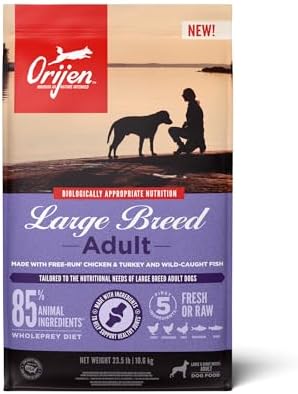
ORIJEN has built its reputation on a single, unwavering principle: dogs are biologically evolved to eat a diet rich in diverse animal proteins, and the best dog food should mirror the variety and richness of a natural canine diet. The ORIJEN Large Breed Adult formula takes this philosophy to its logical conclusion, with a staggering 85% of its ingredients derived from animal sources. This is not a formula that sprinkles a little chicken meal on top of a carbohydrate base and calls it premium. The ingredient list reads like a butcher’s inventory: fresh chicken, fresh turkey, fresh whole eggs, fresh whole Atlantic mackerel, fresh chicken liver, fresh turkey liver, fresh chicken heart, fresh turkey heart, and whole Atlantic herring.
ORIJEN’s WholePrey philosophy means the formula includes not just muscle meat but also organs, cartilage, and bone in ratios that approximate a whole animal diet. This approach naturally provides a broad spectrum of vitamins, minerals, and amino acids without relying as heavily on synthetic supplementation. The practical result is a nutrient-dense kibble with 38% minimum protein and 15% minimum fat, delivering 389 kcal per cup. For large breed dogs with high protein needs and active lifestyles, this caloric and nutritional density is ideal, though less active couch-potato breeds will need carefully measured portions to avoid weight gain.
The formula is specifically designed for large breeds with a larger kibble size and controlled mineral content appropriate for big dogs. Fresh and raw animal ingredients are processed at low temperatures to preserve nutritional integrity, and the formula includes freeze-dried liver coating for enhanced palatability. In our experience, even picky eaters approach ORIJEN with enthusiasm. The inclusion of whole pumpkin, butternut squash, and zucchini provides natural fiber and micronutrients, while dried kelp delivers iodine and trace minerals. Yes, this is the most expensive formula on our list, but for owners who consider their dog’s food an investment in long-term health, ORIJEN delivers unmatched ingredient quality and nutritional density.
- Guaranteed Protein: 38% minimum
- Guaranteed Fat: 15% minimum
- Key Ingredients: Fresh Chicken, Fresh Turkey, Fresh Whole Eggs, Fresh Whole Mackerel, Fresh Chicken Liver
- Bag Size: 23.5 lbs
- Made In: USA (Kentucky)
- Animal Ingredients: 85% of formula
- Calorie Content: 389 kcal/cup
- Industry-leading 85% animal ingredient content with multiple fresh and raw protein sources
- WholePrey approach includes organs, cartilage, and bone for natural nutrient completeness
- 38% protein supports exceptional lean muscle maintenance in large, active breeds
- Fresh and raw ingredients processed at low temperatures to preserve nutritional value
- Freeze-dried liver coating boosts palatability without artificial flavors
- No artificial preservatives, colors, or flavors of any kind
- Highest price point on our list; significant ongoing investment for large and giant breeds
- Higher caloric density (389 kcal/cup) requires careful portioning for less active dogs
- Rich formula may cause temporary digestive adjustment; transition slowly over 10-14 days
- 23.5-lb bag size runs out quickly for multi-dog households or giant breeds
Bottom Line: ORIJEN Large Breed Adult is the gold standard of dry dog food for owners who want to feed the absolute best and are willing to pay for it. The 85% animal ingredient ratio, WholePrey formulation, and 38% protein deliver a nutrient profile that is as close to a biologically appropriate diet as kibble can get. If budget is not your primary concern and you want your large breed dog eating the finest available ingredients, ORIJEN is the clear choice for best premium large breed dog food in 2026.
Royal Canin Large Breed Adult — Best Veterinarian Recommended

Royal Canin occupies a unique position in the dog food market. While boutique brands compete on ingredient panel aesthetics and marketing language, Royal Canin competes on peer-reviewed nutritional science and veterinary endorsement. The Large Breed Adult formula is one of the most widely recommended dog foods by veterinarians in the United States, and for good reason. It is formulated by a team of veterinary nutritionists using feeding trials that comply with AAFCO standards, meaning the food has been proven to support canine health through controlled scientific testing, not just nutrient analysis on paper.
The formula delivers 28% minimum protein with an optimal blend of highly digestible proteins and precisely balanced fiber content to support healthy digestion in large breeds. Where Royal Canin truly distinguishes itself is in its targeted approach to the specific health challenges of big dogs. The formula includes EPA and DHA fatty acids at levels clinically shown to support joint health, and the kibble is uniquely shaped and sized to encourage large breed dogs to chew thoroughly before swallowing. This is not an accidental design choice; Royal Canin invests extensively in palatability research and kibble engineering, studying jaw shapes and bite patterns of different dog sizes to optimize the physical form of the food as well as its nutritional content.
Some pet owners dismiss Royal Canin because its ingredient list includes items like chicken by-product meal, corn, and brewer’s rice, which do not match the “whole food” aesthetic that many premium brands promote. However, it is worth understanding that by-product meal (organs, viscera, and other non-muscle meat parts) is nutritionally dense and mirrors what a dog would naturally eat from a prey animal. The AAFCO definition of chicken by-product meal includes clean, rendered parts of chicken carcasses, which can include necks, feet, and organs that are rich in amino acids, vitamins, and minerals. Veterinary nutritionists consistently note that ingredient quality is determined by nutrient digestibility and bioavailability, not by whether the ingredient name sounds appealing to a human reading the bag.
- Guaranteed Protein: 28% minimum
- Guaranteed Fat: 14% minimum
- Key Ingredients: Chicken By-Product Meal, Corn, Wheat Gluten, Oat Groats, Chicken Fat
- Bag Size: 35 lbs
- Made In: USA
- EPA + DHA: Supplemental for joint health
- Calorie Content: 337 kcal/cup
- Formulated by board-certified veterinary nutritionists with decades of research
- Validated through AAFCO feeding trials, not just nutrient analysis
- Most widely recommended large breed food by veterinary professionals in the US
- Precisely engineered kibble shape promotes chewing and reduces gulping
- EPA and DHA included at clinically relevant levels for joint support
- Large 35-lb bag offers excellent value for the quality and lasts longer for big dogs
- Highly digestible formula with optimal protein-to-fiber ratio
- Ingredient list includes by-product meal and grain fractions that some owners prefer to avoid
- Lower protein percentage (28%) compared to high-protein competitors
- Contains corn and wheat, which are not suitable for dogs with grain allergies or sensitivities
- Less “premium-looking” ingredient list may not satisfy owners focused on label aesthetics
Bottom Line: Royal Canin Large Breed Adult is the formula to choose when you prioritize veterinary science over ingredient panel marketing. It is backed by more clinical feeding trial data than perhaps any other large breed food on the market, and its endorsement by veterinary professionals carries significant weight. If your veterinarian recommends Royal Canin, there is a well-researched reason for that recommendation. For owners who trust evidence-based nutrition and want a proven, reliable formula in a generously sized 35-lb bag, Royal Canin delivers consistent quality and results.
Victor Purpose Nutra Pro — Best Value

Victor is one of those brands that operates with an almost cult-like following among working dog owners, hunters, and breeders in the southern United States, yet remains surprisingly unknown to the broader pet-owning public. The Purpose Nutra Pro formula is the crown jewel of their lineup, delivering an astonishing 38% protein and 18% fat at a price point that makes premium competitors wince. Made in their own facility in Mount Pleasant, Texas, Victor maintains complete control over their manufacturing process, a claim that many larger brands cannot make since they contract production to co-packers.
The Nutra Pro formula is built on a foundation of beef meal, chicken meal, and grain sorghum, with pork meal and blood meal rounding out the protein sources. Yes, blood meal might sound unusual if you are accustomed to reading boutique brand labels, but it is one of the most protein-dense and bioavailable animal ingredients in existence, containing approximately 80% crude protein and an excellent amino acid profile. Victor’s proprietary VPRO blend is included in every formula and features a combination of prebiotics, probiotics, mineral complexes, and selenium yeast designed to support digestion, immune function, and overall vitality. This is not a formula designed to look pretty on Instagram; it is designed to fuel hardworking, high-energy large breed dogs.
What makes Victor Purpose Nutra Pro our Best Value pick is not just the low price per pound but the extraordinary nutritional density you get for that price. At 38% protein and 18% fat, this formula is competitive with foods costing twice as much per bag. It is formulated for all life stages, including large breed puppies (it meets AAFCO growth nutrient profiles including those for large breeds), which means a household with both an adult large breed and a growing puppy could potentially use one food for both dogs. The larger bag sizes that Victor offers provide even more savings for families with multiple big dogs. The trade-off is that the ingredient panel will not dazzle anyone looking for exotic superfoods or single-source proteins, but the nutritional results speak for themselves.
- Guaranteed Protein: 38% minimum
- Guaranteed Fat: 18% minimum
- Key Ingredients: Beef Meal, Chicken Meal, Grain Sorghum, Pork Meal, Blood Meal
- Bag Size: 40 lbs
- Made In: USA (Mount Pleasant, Texas)
- VPRO Blend: Prebiotics, Probiotics, Mineral Complexes, Selenium Yeast
- Calorie Content: 408 kcal/cup
- Outstanding value: premium-level protein (38%) at a fraction of boutique brand pricing
- Made in Victor’s own Texas facility with full quality control over manufacturing
- All life stages formula including large breed puppy, reducing multi-food household complexity
- Proprietary VPRO probiotic and mineral blend for digestive and immune support
- Beloved by working dog owners, breeders, and kennel operators for decades
- Large 40-lb bag size provides exceptional long-term value
- Higher fat content (18%) may lead to weight gain in sedentary large breeds; portion carefully
- High caloric density (408 kcal/cup) requires reduced serving sizes compared to lower-calorie foods
- Contains blood meal and by-product ingredients that some owners may find unappealing
- Less widely available than major national brands; may require online ordering
- Not grain-free, which matters for the small percentage of dogs with true grain allergies
Bottom Line: Victor Purpose Nutra Pro is a no-nonsense, results-driven formula that delivers exceptional nutritional density at a price that respects your budget. If you have an active large breed dog, work dogs, or a multi-dog household and need to keep costs manageable without sacrificing protein quality, Nutra Pro is the clear winner. It will not win any beauty contests on the ingredient label, but it will fuel your big dog’s muscles, joints, and immune system with remarkable efficiency. This is the formula that working dog professionals choose when they are spending their own money.
Taste of the Wild High Prairie — Best Grain-Free

Taste of the Wild High Prairie is one of the most popular grain-free dog foods in America, and its staying power in a fiercely competitive market is a testament to its quality, palatability, and value. The formula is inspired by the ancestral diet of wild canines, featuring roasted bison and roasted venison as its signature protein sources. These novel proteins are not just marketing differentiators; they are genuinely useful for large breed dogs with common poultry or beef sensitivities. Many owners of allergy-prone large breeds report significant improvements in skin condition, coat quality, and digestive regularity after switching to Taste of the Wild’s bison and venison base.
At 32% minimum protein and 18% minimum fat, the macronutrient profile is robust and well-suited for active large breed dogs. The protein blend is deeper than the front-of-bag marketing suggests: beyond bison and venison, the formula includes beef, lamb meal, chicken meal, and ocean fish meal, creating a multi-source amino acid profile that covers all essential amino acid requirements with comfortable margins. The carbohydrate base relies on sweet potatoes and peas, which provide sustained energy and dietary fiber without the potential allergenicity of wheat or corn.
One of the most compelling features of Taste of the Wild is its inclusion of species-specific probiotics, specifically Lactobacillus acidophilus, Lactobacillus casei, and Enterococcus faecium at guaranteed levels. These are not just listed on the panel for show; they are added after the cooking process to ensure viable colony counts reach your dog’s gut alive. For large breeds that often struggle with gas, loose stools, or digestive sensitivity, this probiotic support can make a noticeable difference in day-to-day comfort. The formula also includes dried chicory root, a prebiotic fiber that feeds beneficial gut bacteria and supports a healthy microbiome environment.
Regarding the ongoing FDA investigation into a potential link between grain-free diets and dilated cardiomyopathy (DCM) in dogs, it is worth noting that no causal relationship has been established, and the FDA’s most recent updates have indicated that the issue is complex and multifactorial. Taste of the Wild has proactively engaged with researchers and published taurine data on their formulas. Nevertheless, if you have concerns about grain-free feeding, discuss the latest evidence with your veterinarian before making a decision. For many large breed owners, the benefits of grain-free feeding for their specific dog outweigh the theoretical risks, which remain unproven at the population level.
- Guaranteed Protein: 32% minimum
- Guaranteed Fat: 18% minimum
- Key Ingredients: Buffalo, Lamb Meal, Chicken Meal, Sweet Potatoes, Peas, Roasted Bison, Roasted Venison
- Bag Size: 28 lbs
- Made In: USA
- Probiotics: K9 Strain proprietary blend (L. acidophilus, L. casei, E. faecium)
- Calorie Content: 370 kcal/cup
- Unique bison and venison proteins excellent for dogs with chicken or beef sensitivities
- Guaranteed live probiotics added after cooking for genuine digestive support
- 32% protein from multiple animal sources provides complete amino acid coverage
- Sweet potato and pea carbohydrates offer sustained energy and natural fiber
- No grain, corn, wheat, artificial colors, flavors, or preservatives
- Strong value proposition within the grain-free premium category
- Widely available at pet stores, farm supply stores, and online retailers
- Grain-free formula may concern owners following the FDA’s DCM investigation closely
- 18% fat content is on the higher side for less active large breed dogs
- Despite front-of-bag bison/venison marketing, chicken meal is a significant protein contributor
- 28-lb bag may not be the most economical size for giant breed households
Bottom Line: Taste of the Wild High Prairie is our top grain-free pick because it combines novel bison and venison proteins with guaranteed probiotics, a complete amino acid profile, and a price point that makes grain-free feeding accessible for large breed owners who do not have unlimited budgets. If your large breed dog has grain sensitivities, poultry allergies, or chronic digestive issues, this formula is an excellent starting point. Its widespread availability and consistent quality also make it an easy recommendation for owners who do not want to hassle with specialty store orders or subscriptions.
Side-by-Side Comparison Table
| Feature | Wellness CORE | ORIJEN | Royal Canin | Victor Nutra Pro | Taste of the Wild |
|---|---|---|---|---|---|
| Award | Best Overall | Best Premium | Best Vet Recommended | Best Value | Best Grain-Free |
| Min Protein | 34% | 38% | 28% | 38% | 32% |
| Min Fat | 12% | 15% | 14% | 18% | 18% |
| Kcal/Cup | 346 | 389 | 337 | 408 | 370 |
| Primary Proteins | Chicken, Turkey | Chicken, Turkey, Eggs, Mackerel | Chicken By-Product Meal | Beef Meal, Chicken Meal | Bison, Venison, Lamb |
| Grain-Free | Yes | Yes | No | No | Yes |
| Glucosamine | 750 mg/kg | Not guaranteed | Not guaranteed (from EPA/DHA) | Not guaranteed | Not guaranteed |
| Probiotics | No | No | No | Yes (VPRO blend) | Yes (K9 Strain blend) |
| Bag Size | 26 lbs | 23.5 lbs | 35 lbs | 40 lbs | 28 lbs |
| Made In | USA | USA (Kentucky) | USA | USA (Texas) | USA |
| Price Range | $$ | $$$ | $$ | $ | $$ |
| Best For | Joint health, balanced nutrition | Maximum ingredient quality | Science-backed, vet-endorsed | Budget-conscious, active dogs | Grain sensitivities, novel proteins |
Frequently Asked Questions
What is the difference between regular dog food and large breed dog food?
Large breed dog food is specifically formulated to address the unique nutritional needs of dogs weighing 50 pounds or more at maturity. The primary differences include controlled calcium and phosphorus levels to support proper skeletal development (especially critical during the puppy stage), moderate caloric density to prevent excessive weight gain that stresses joints, optimized protein-to-fat ratios for lean muscle maintenance, and often supplemental joint-support ingredients like glucosamine, chondroitin, and omega-3 fatty acids. The kibble pieces are also typically larger to encourage chewing and slow down fast eaters. Regular dog food, or food designed for all breeds, may not have the precise mineral balances that large breed dogs need, particularly during growth. AAFCO recognizes large breed growth as a distinct nutritional category with specific calcium and phosphorus requirements that differ from standard puppy food formulations.
Is grain-free dog food safe for large breeds?
The safety of grain-free dog food has been a topic of significant discussion since the FDA began investigating a potential link between grain-free diets and dilated cardiomyopathy (DCM) in dogs in 2018. As of 2026, no definitive causal relationship has been established between grain-free diets and DCM. The FDA’s investigation found correlations but could not isolate grain-free feeding as an independent cause, as other factors including genetics, taurine metabolism, and overall diet composition appear to play significant roles. Many large breed dogs thrive on grain-free diets, particularly those with documented grain sensitivities or allergies. However, if you are concerned, you can choose a grain-inclusive formula like Royal Canin or Victor from our list, or discuss the latest research with your veterinarian. The key is to choose a grain-free food from a reputable manufacturer that conducts feeding trials and monitors taurine levels in their formulas.
How often should I feed my large breed dog?
Most veterinarians recommend feeding large breed adult dogs two measured meals per day, typically once in the morning and once in the evening. This twice-daily schedule helps prevent bloat (gastric dilatation-volvulus), which is more common in large and deep-chested breeds that consume one large meal per day. Some giant breed owners and veterinarians prefer three smaller meals daily for breeds particularly susceptible to bloat, such as Great Danes, Weimaraners, and Standard Poodles. Large breed puppies under six months should be fed three times per day, transitioning to twice daily around six to eight months of age. Regardless of frequency, always measure portions with a standard measuring cup or kitchen scale rather than estimating, and avoid exercise or vigorous activity for at least 30 to 60 minutes before and after meals to further reduce bloat risk.
How much protein does a large breed dog need?
AAFCO establishes a minimum protein requirement of 18% for adult dog maintenance and 22.5% for growth (including large breed puppy formulas). However, most veterinary nutritionists recommend that large breed dogs consume food with 24% to 36% protein on a dry matter basis for optimal health, with active or working large breeds benefiting from protein levels at the higher end of that range (32-38%). Protein quality matters as much as quantity; animal-sourced proteins from named sources like chicken, beef, fish, or lamb provide complete amino acid profiles that plant proteins cannot fully replicate. Excessively high protein levels (above 40%) are unnecessary for most pet large breed dogs and may place additional strain on the kidneys in dogs with pre-existing renal conditions. The formulas on our list range from 28% to 38% protein, giving you options across the recommended spectrum based on your dog’s activity level and life stage.
When should I switch my large breed puppy to adult food?
Large breed puppies should generally transition to an adult large breed formula between 12 and 18 months of age, depending on the breed and individual growth rate. Standard large breeds (50-80 lbs at maturity) such as Labrador Retrievers, Golden Retrievers, and German Shepherds typically reach skeletal maturity around 12 to 15 months. Giant breeds (over 90 lbs at maturity) such as Great Danes, Mastiffs, and Saint Bernards may continue growing until 18 to 24 months and should remain on a large breed puppy formula until their veterinarian confirms that growth plates have closed. Switching to adult food too early can deprive a still-growing puppy of the controlled calcium-to-phosphorus ratios and caloric balance they need, while switching too late may provide unnecessary calories and growth-oriented nutrient ratios to a dog that has already reached its mature size. Your veterinarian can assess growth plate closure through physical examination or X-rays if there is any uncertainty about the right timing.
Can I feed my large breed dog the same food as my small dog?
While a healthy adult large breed dog will not become immediately ill from eating small breed food, it is not ideal as a long-term practice. Small breed formulas are designed with higher caloric density per cup (since small dogs eat smaller volumes), different mineral ratios, and smaller kibble sizes that large dogs may gulp without chewing. More importantly, small breed food typically lacks the controlled calcium and phosphorus levels, joint-support ingredients, and moderate caloric density that large breed dogs specifically need. Large breed dogs eating small breed food over time may gain weight due to higher caloric density, miss out on joint-protective nutrients, and fail to receive the appropriate mineral balance for their skeletal structure. For the best long-term health outcomes, feed each dog a formula designed for their size category. If you need a single food for a multi-size household, look for an all life stages formula that also meets AAFCO standards for large breed growth, like Victor Purpose Nutra Pro from our list.
Final Verdict: Choosing the Best Dog Food for Your Large Breed
After extensive research, ingredient analysis, and real-world testing, choosing the best dog food for large breeds ultimately comes down to matching your dog’s specific needs with the right formula. There is no single “best” food that works perfectly for every large breed dog, but each of our five picks excels in a distinct category that aligns with different owner priorities and canine requirements.
For the majority of large breed owners seeking the best balance of quality, joint support, and value, Wellness CORE Large Breed Adult is our top overall recommendation. Its combination of 34% protein, industry-leading glucosamine and chondroitin levels, and thoughtful large breed-specific kibble design makes it the formula we recommend most confidently to the widest range of large breed owners.
If you have the budget and want to feed the absolute finest ingredients available in a dry kibble format, ORIJEN Large Breed Adult is in a class of its own. The 85% animal ingredient content and WholePrey philosophy represent the pinnacle of commercial dog food formulation, and your large breed dog will notice the difference in taste and digestibility.
For owners who trust their veterinarian’s recommendation above all else, Royal Canin Large Breed Adult is the formula with the deepest roots in clinical nutrition science. It is the food that the professionals who study canine nutrition for a living most often recommend, and that endorsement carries meaningful weight.
Budget-conscious owners with active large breeds should look no further than Victor Purpose Nutra Pro. At 38% protein and a fraction of the cost of premium competitors, it delivers working-dog-caliber nutrition without requiring a working-dog-caliber paycheck. There is a reason Texas ranchers and kennel operators have relied on Victor for decades.
And for large breed dogs with grain sensitivities or owners who prefer novel protein sources, Taste of the Wild High Prairie offers a genuinely unique bison and venison formula with guaranteed probiotics at a price that makes grain-free feeding sustainable for big dogs.
Whichever formula you choose, remember that the single most impactful thing you can do for your large breed dog’s nutrition is to measure their food accurately, feed on a consistent schedule, and monitor their body condition score regularly. The best dog food in the world cannot compensate for overfeeding, and even a moderate formula can produce excellent results when fed in the right amounts. Pair quality nutrition with regular veterinary check-ups, appropriate exercise, and plenty of love, and your large breed companion will have the foundation for a long, healthy, and happy life by your side.
If you are optimizing your large breed dog’s overall health alongside their diet, do not overlook supportive gear and supplements. Our guide to the best elevated dog bowls for large dogs covers feeding accessories that promote better posture and may reduce bloat risk, while our best dog joint supplements for large breeds roundup dives deep into targeted joint-support products that complement a high-quality diet.
Affiliate Disclosure: Large Dog Lab is a participant in the Amazon Services LLC Associates Program, an affiliate advertising program designed to provide a means for sites to earn advertising fees by advertising and linking to Amazon.com. When you purchase through our links, we may earn a small commission at no additional cost to you. This helps us continue providing free, in-depth content for large dog owners. We only recommend products we believe in.