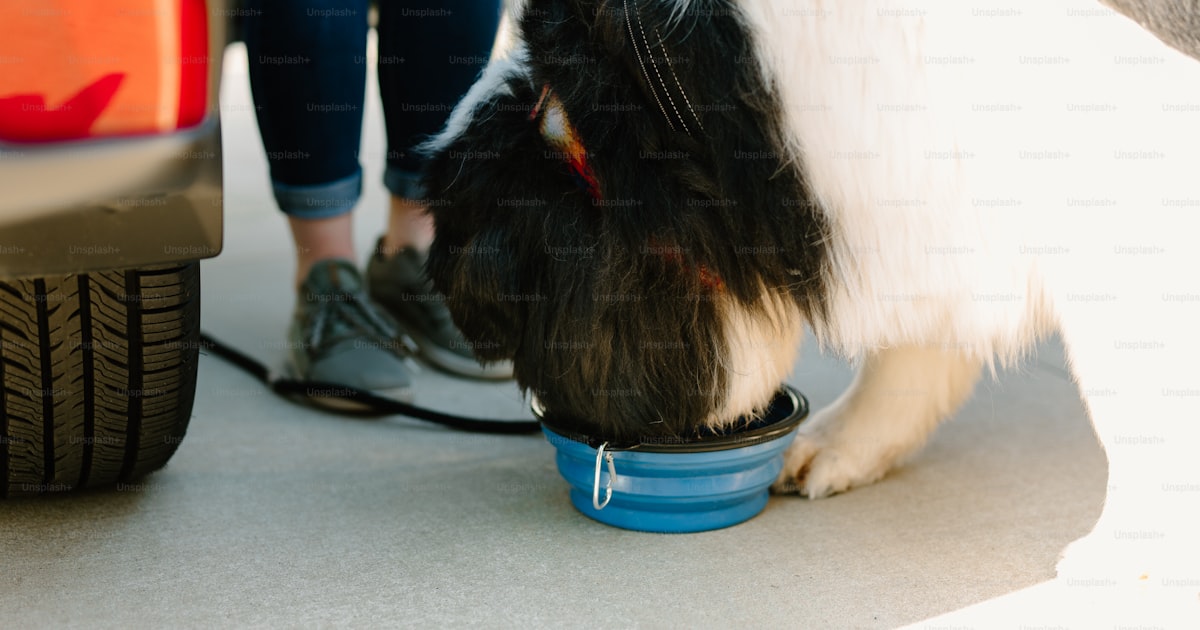
If you own a large or giant breed dog, you have probably watched your dog hunch over a floor-level bowl and wondered whether there is a better way. Elevated dog bowls, also called raised feeders, lift your dog’s food and water to a more comfortable height so they do not have to bend all the way down to the ground. For breeds like German Shepherds, Great Danes, Labrador Retrievers, Golden Retrievers, and Mastiffs, the difference in posture can be dramatic. Instead of splaying their front legs or craning their necks downward, large dogs can eat and drink in a more natural, upright stance.
The benefits go beyond simple comfort. Many veterinarians and canine physical therapists recommend elevated feeders for large dogs that suffer from arthritis, hip dysplasia, cervical spondylosis, or general joint stiffness. A raised bowl reduces the strain on the neck, shoulders, and front legs, which can be a genuine quality-of-life improvement for senior dogs or dogs recovering from surgery. Some owners also report less mess around feeding time, because dogs tend to eat more slowly and with better posture when they are not awkwardly hunched over.
That said, the world of elevated dog bowls is not without controversy. You may have heard concerns about bloat, also known as gastric dilatation-volvulus or GDV, and whether raised feeders increase the risk. We will address that head-on in this guide with an honest look at the research. Beyond that debate, there are practical questions about height, material, adjustability, and build quality that matter a great deal when you are shopping for a large breed dog. In this guide, we review the best elevated dog bowls for large dogs, walk through everything you need to know before buying, and help you find the perfect raised dog bowl stand for your four-legged companion.
Table of Contents
Buying Guide: Elevated Bowls for Large Dogs
Before we dive into individual product reviews, it is important to understand what makes an elevated feeder large breed dogs actually need different from the smaller versions you see marketed for toy and medium breeds. Large dogs put more stress on feeding stations, need taller stands, and require larger bowl capacities. Here is what to look for.
Benefits of Elevated Bowls for Large Dogs
The most obvious benefit of an elevated dog bowl is improved posture during meals. When a 90-pound Labrador Retriever eats from a bowl on the floor, the dog has to lower its head roughly 20 to 24 inches below its natural standing position. That puts significant downward pressure on the cervical spine, the front leg joints, and the muscles of the neck and shoulders. Over time, and especially as dogs age, this repeated strain can contribute to discomfort and exacerbate existing orthopedic conditions.
With a properly sized raised dog bowl stand, your dog eats with its head and neck at a much more neutral angle. This is particularly valuable for dogs dealing with arthritis in the shoulders or front legs, cervical disc disease, megaesophagus (a condition where the esophagus loses motility and food can pool), and post-surgical recovery from orthopedic procedures. For dogs with megaesophagus, elevated feeding is not just a convenience; it is often a medical necessity prescribed by veterinarians to help gravity move food into the stomach.
Beyond health concerns, elevated feeders offer practical everyday benefits. Many owners find that raised bowls reduce the amount of food and water that ends up splashed on the floor. Dogs tend to eat more deliberately when the bowl is at a comfortable height. Raised feeders also keep bowls in place better than a loose bowl on the floor, which large dogs are notorious for pushing around the kitchen. And for the humans in the household, an elevated feeder means you do not have to bend down as far to pick up bowls for washing or refilling, which is a small but appreciated convenience.
Finally, elevated feeders help maintain a cleaner feeding area. Bowls are off the floor, which means less exposure to dust, dirt, and the occasional ant trail. Some elevated feeders also include splash guards or containment features that catch spills before they hit your floor. For multi-dog households, having each dog’s food at a designated elevated station can reduce food guarding behaviors and help you manage feeding times more effectively.
Choosing the Right Height
Getting the height right is the single most important factor when selecting an adjustable dog bowl stand or fixed-height elevated feeder. A bowl that is too low defeats the purpose of elevation, while a bowl that is too high forces your dog to reach upward uncomfortably, which can introduce its own set of problems including increased air swallowing.
The general guideline is that the top rim of the bowl should sit approximately level with your dog’s lower chest. A more precise way to measure is to have your dog stand naturally on all four legs, then measure from the floor to the point where the front legs meet the chest. Subtract about 4 to 6 inches from that measurement, and you have a good target height for the bowl rim. Keep in mind that the bowl itself sits inside the stand, so the effective eating height is typically 1 to 3 inches lower than the top of the stand itself.
Here are some general height guidelines based on dog size, though individual dogs vary:
- Large dogs (50 to 70 pounds): 8 to 12 inches (e.g., Boxers, Standard Poodles, Vizslas)
- Large dogs (70 to 100 pounds): 12 to 16 inches (e.g., Labrador Retrievers, German Shepherds, Golden Retrievers)
- Giant breeds (100+ pounds): 16 to 24 inches (e.g., Great Danes, Mastiffs, Saint Bernards, Irish Wolfhounds)
If you are between sizes or unsure, an adjustable dog bowl stand is the safest bet. These feeders let you set the height at multiple levels, so you can fine-tune the position based on your dog’s specific build. Adjustable stands are also ideal if you have a growing puppy, since you can raise the height as the dog grows rather than buying multiple feeders over the first year or two of life.
One important tip: watch your dog eat at the new height for the first few days. If your dog seems to be stretching upward or still hunching significantly, adjust accordingly. The goal is a relaxed, natural neck position where the dog does not have to work hard to reach the food.
Material Types: Stainless Steel, Ceramic, and Plastic
The bowl material matters for hygiene, durability, and your dog’s health. Here is how the three main options compare:
Stainless steel is the gold standard for dog bowls and the material recommended by most veterinarians. It is non-porous, meaning bacteria cannot penetrate the surface the way it can with scratched plastic. Stainless steel bowls are extremely durable, virtually unbreakable by even the most enthusiastic large breed, dishwasher safe, and easy to sanitize. They do not retain odors or stains. The main drawback is that some dogs are initially put off by the reflective surface or the noise the bowl makes on hard floors, but in an elevated stand this is a non-issue since the bowl is held securely in place. Look for food-grade stainless steel, ideally 304-grade, which is the same material used in commercial kitchen equipment.
Ceramic bowls are heavier than stainless steel, which can be an advantage for keeping the bowl in place, and they come in a wider variety of colors and designs. High-quality ceramic bowls with a lead-free glaze are safe and relatively easy to clean. However, ceramic has significant downsides for large dogs. These bowls can chip or crack if dropped or if a large dog bangs them around, and those chips create crevices where bacteria thrive. Ceramic bowls are also more expensive to replace. If you choose ceramic, inspect the bowls regularly for any signs of cracking or glaze deterioration.
Plastic bowls are the least expensive option, but they are generally not recommended for long-term use, especially with large dogs. Plastic scratches easily, and those scratches harbor bacteria even after washing. Some dogs develop contact allergies to certain plastics, which can cause chin acne or irritation around the muzzle. Plastic bowls also tend to retain odors and can leach chemicals over time, particularly with hot food or if the plastic degrades in the dishwasher. If a feeder comes with plastic bowls, consider whether you can swap them for stainless steel replacements.
For the stand itself, common materials include powder-coated metal, bamboo, solid wood, heavy-duty plastic, and melamine. Metal and bamboo stands tend to offer the best combination of durability and aesthetics. When evaluating stand materials, pay attention to the weight capacity and overall stability, since a large dog leaning on or bumping into a flimsy stand will knock it over in short order.
The GDV/Bloat Debate: What the Research Actually Says
No article about elevated dog bowls would be honest without addressing the bloat question. Gastric dilatation-volvulus, commonly called bloat or GDV, is a life-threatening emergency in which the stomach fills with gas and can twist on itself. It occurs most frequently in large, deep-chested breeds like Great Danes, German Shepherds, Standard Poodles, Weimaraners, and Setters.
The concern about elevated feeders and bloat traces primarily to a 2000 study published in the Journal of the American Veterinary Medical Association by Dr. Lawrence Glickman and colleagues at Purdue University. This large-scale study of approximately 1,637 dogs found a statistical association between the use of elevated food bowls and an increased risk of GDV, particularly in large and giant breed dogs. The study estimated that approximately 52 percent of GDV cases in large breed dogs and 20 percent in giant breed dogs could be attributed to having a raised food bowl.
However, this study has been widely discussed and critiqued within the veterinary community. It was an observational study, not a controlled experiment, which means it identified a correlation but could not prove causation. There are several confounding factors that may have influenced the results. For example, dogs that were already eating from elevated bowls may have been placed on them because they had pre-existing conditions like megaesophagus or musculoskeletal issues, conditions that themselves could be associated with GDV risk. The study also relied on owner-reported data, which can introduce recall bias.
Other research has not consistently replicated these findings. A number of veterinary experts have pointed out that the known risk factors for GDV include eating one large meal per day instead of two or three smaller meals, eating rapidly, being fed a dry diet with fat or oil listed among the first four ingredients, having a first-degree relative that experienced GDV, being a fearful or anxious temperament, and exercising vigorously around mealtime. The role of elevated feeders remains debated and is not considered a definitive cause.
So what should you do? The honest answer is that there is no clear consensus. If your dog has a medical condition that benefits from elevated feeding, such as megaesophagus, arthritis, or post-surgical recovery, the benefits likely outweigh the uncertain risk. If you are primarily considering an elevated feeder for convenience or comfort and your dog is a breed with high GDV risk, discuss it with your veterinarian. Many vets will recommend elevated feeders for appropriate situations while also suggesting other GDV risk-reduction strategies like feeding smaller, more frequent meals, using a slow-feeder bowl to reduce eating speed, and avoiding exercise immediately before and after meals. A gastropexy, a surgical procedure that tacks the stomach to the body wall, is the most effective known prevention for GDV in high-risk breeds and is often performed at the time of spay or neuter.
We believe in giving you the full picture so you can make an informed decision with your veterinarian’s guidance rather than making that decision for you.
Features That Matter: Adjustable, Anti-Slip, Dishwasher Safe
Once you have settled on height and material, there are several additional features that separate a good elevated feeder large breed option from a great one:
Adjustability: As mentioned earlier, an adjustable dog bowl stand is incredibly versatile. Some stands offer two or three height settings, while others provide continuously adjustable heights. If you have multiple dogs of different sizes, a puppy that is still growing, or you simply want to experiment to find the optimal height, adjustability is worth prioritizing. Look for adjustment mechanisms that are sturdy and do not wobble at different height settings.
Anti-slip base: Large dogs can be enthusiastic eaters, and a feeder that slides across the floor every time your dog takes a bite is frustrating for everyone. The best elevated feeders have rubber or silicone pads on the bottom of the legs to grip the floor. Some also have a wide base or weighted design for extra stability. Test the feeder on the surface where you plan to use it, since a feeder that grips well on tile might slide on hardwood.
Dishwasher-safe bowls: You should be washing your dog’s food and water bowls daily. If the bowls that come with the feeder are dishwasher safe, that makes daily cleaning effortless. Most stainless steel bowls are dishwasher safe. Check whether the bowls are a standard size that can be easily replaced if one gets dented or lost.
Bowl capacity: Large dogs need large bowls. Make sure the feeder accommodates bowls that hold enough food and water for your dog. For most large breeds, you want bowls that hold at least 48 to 64 ounces of food per bowl. For giant breeds, 96 ounces or more may be appropriate for the water bowl especially.
Splash guards and containment: Some feeders include raised edges, splash guards, or integrated drip trays that catch spills and keep the feeding area cleaner. This is particularly useful for dogs that are sloppy drinkers. Breeds that tend to drool heavily, like Saint Bernards and Mastiffs, benefit especially from feeders with containment features.
Ease of assembly and disassembly: You will want to clean not just the bowls but the stand itself periodically. Feeders that are easy to take apart and wipe down or hose off will stay more hygienic over time. Avoid feeders with lots of hard-to-reach crevices where food debris and bacteria can accumulate.
Weight capacity and stability: This is critical for large breed owners. A feeder rated for a small or medium dog may not withstand the force of a 100-pound dog eating vigorously. Check the manufacturer’s weight recommendations and look for heavy-duty construction with thick-gauge metal or solid hardwood.
Quick Picks: Best Elevated Dog Bowls at a Glance
| Product | Award | Best For | Heights | Bowl Material | Link |
|---|---|---|---|---|---|
| Niubya Elevated Dog Bowls | Best Overall | All-around value and versatility | 3 adjustable heights | Stainless Steel | Check Price |
| Neater Feeder Express | Best Mess-Proof | Sloppy eaters and drinkers | Fixed (large size) | Stainless Steel | Check Price |
| PetComfort Double Feeding System | Best Premium | Quality-focused owners | Fixed (multiple sizes available) | NSF Certified | Check Price |
| URPOWER Elevated Dog Bowls | Best Adjustable | Growing puppies, multi-dog homes | 4 adjustable heights | Stainless Steel | Check Price |
| Pawfect Pets Elevated Feeder | Best Wooden/Bamboo | Style-conscious owners | Fixed (12-inch) | Stainless Steel | Check Price |
In-Depth Product Reviews
Niubya Elevated Dog Bowls – Best Overall

The Niubya Elevated Dog Bowls take our top spot because they deliver exactly what most large dog owners need: solid construction, adjustable height, quality stainless steel bowls, and a reasonable price. This feeder offers three distinct height settings, which makes it suitable for dogs ranging from about 50 pounds up to well over 100 pounds depending on the height adjustment selected. The stand is made of sturdy powder-coated metal with a clean, modern design that does not look out of place in a kitchen or dining area.
What impressed us most about the Niubya is the stability at each height setting. Unlike some adjustable feeders that wobble or feel flimsy when extended to their tallest position, the Niubya maintains a solid, planted feel. The legs are equipped with non-slip rubber pads that grip well on tile, hardwood, and laminate floors. The two included stainless steel bowls are a generous size for large dogs, dishwasher safe, and fit securely into the stand without rattling around.
Assembly is straightforward and requires no tools. The adjustment mechanism is simple enough that you can change the height in seconds, which is helpful if you are still dialing in the perfect position for your dog or if multiple dogs of different sizes share the feeder at different times. The overall build quality is a step above what you typically find at this price point, and the feeder has held up well in long-term testing with large breed dogs.
The main limitation is that the bowls, while adequate for most large dogs, may feel slightly small for giant breeds that need very high capacity bowls. If you have a Great Dane or Mastiff, you might want to check whether aftermarket larger bowls will fit the stand openings. For the vast majority of large breed owners, though, the included bowls are perfectly sized.
Specifications
- Heights: 3 adjustable settings (approximately 8, 10, and 12 inches)
- Bowl Material: Food-grade stainless steel
- Bowl Capacity: 56 oz each
- Stand Material: Powder-coated iron
- Anti-Slip: Yes, rubber pads on legs
- Dishwasher Safe Bowls: Yes
- Assembly: No tools required
- Three adjustable height settings for versatile sizing
- Sturdy powder-coated iron stand with minimal wobble
- Non-slip rubber pads keep the feeder in place
- Stainless steel bowls are dishwasher safe and food-grade
- Tool-free assembly and height adjustment
- Excellent value for the build quality
- Bowl capacity may be slightly small for giant breeds over 120 lbs
- Powder coating can chip if the stand is dragged across rough surfaces
- Only available in limited color options
Bottom Line: The Niubya Elevated Dog Bowls offer the best combination of adjustability, build quality, and value for large dog owners. The three-height design accommodates a wide range of breeds, the stainless steel bowls are easy to clean, and the stand is genuinely stable. This is the feeder we recommend for most large dog households.
Neater Feeder Express – Best Mess-Proof
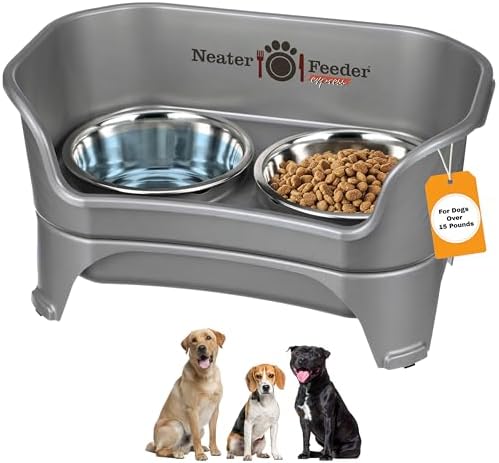
If your large dog turns every meal into a splash zone, the Neater Feeder Express is designed specifically to solve that problem. This is not just an elevated feeder; it is a complete mess-containment system. The patented design features higher splash guard walls around the food and water bowls, with a built-in drip-catching system that funnels spilled water into a lower reservoir rather than letting it pool on your floor. For breeds like Labs, Goldens, and Bernese Mountain Dogs that are famously sloppy drinkers, this design is genuinely transformative.
The Neater Feeder Express comes in a large size that works well for dogs in the 50 to 100 pound range. The elevated design raises the bowls to a comfortable height for large breeds, while the integrated walls contain the mess that would otherwise end up on your floor, baseboards, and walls. The included stainless steel bowls are well-made and dishwasher safe, and they sit securely within the unit. The entire upper tray lifts out for easy cleaning, and the lower drip tray can be emptied and wiped down in seconds.
In real-world use, the Neater Feeder lives up to its name. The difference in floor mess is immediately noticeable, especially with dogs that like to dunk their entire muzzle in the water bowl or flick food out of the bowl while eating. The splash guards are tall enough to catch the majority of spills without being so high that they interfere with the dog’s ability to eat comfortably. The overall construction is solid high-density plastic that feels durable and is easy to sanitize.
The tradeoff is that the Neater Feeder is not adjustable in height. It comes in set sizes, so you need to choose the right one for your dog. The large size is appropriate for most large breeds, but giant breeds may find it slightly too low. The unit also takes up more floor space than a simple raised stand due to the containment walls and drip tray system. If mess is not a major concern for you, a simpler elevated stand may be more practical.
Specifications
- Height: Approximately 10 inches (large size)
- Bowl Material: Stainless steel
- Bowl Capacity: 7 cups (food), 9 cups (water)
- Stand Material: High-density plastic with splash guards
- Anti-Slip: Yes, non-skid legs
- Dishwasher Safe Bowls: Yes
- Containment: Splash guards with lower drip reservoir
- Outstanding mess containment with splash guards and drip tray
- Stainless steel bowls are generous and dishwasher safe
- Easy to disassemble and clean thoroughly
- Non-skid legs provide good stability
- Dramatically reduces floor mess from sloppy eaters and drinkers
- Durable high-density plastic construction
- Not adjustable in height; must buy the correct size
- Larger footprint than simple elevated stands
- Plastic construction may not match the aesthetics of every kitchen
- Large size may still be slightly low for giant breeds over 100 lbs
Bottom Line: The Neater Feeder Express is the clear winner for any large dog owner dealing with messy mealtimes. Its patented splash guard and drip-catching design genuinely works, and the stainless steel bowls are well-made and easy to clean. If your dog turns the water bowl into a splash pad, this feeder will save your floors and your sanity.
PetComfort Double Feeding System – Best Premium

The PetComfort Double Feeding System represents the premium end of the elevated feeder market, and it earns that position with genuinely superior materials and manufacturing standards. What sets PetComfort apart is that their bowls are NSF International certified, meaning they meet the same food safety standards required for equipment used in commercial restaurants and food service. This is not a marketing gimmick; NSF certification requires rigorous testing for material safety, cleanability, and durability. For owners who want the absolute safest feeding setup for their large dog, PetComfort delivers.
The bowls themselves are made from a proprietary material that is completely non-porous, BPA-free, and resistant to scratching and bacterial buildup. Unlike stainless steel, which can develop micro-scratches over time, or plastic, which scratches easily and harbors bacteria, the PetComfort bowls maintain their smooth, sanitary surface even after years of use and hundreds of dishwasher cycles. The stand is solidly built with a stable base that resists tipping, and the overall design is clean and minimalist.
In practice, the PetComfort system feels like a substantial upgrade over budget options. The bowls are satisfyingly heavy and sit securely in the stand. The feeding height is appropriate for large breeds, and the stand does not wobble or slide during mealtimes. Cleaning is effortless, and the bowls genuinely do resist staining and odor retention better than any other material we have tested. If your dog eats raw food or wet food, the non-porous surface is particularly valuable since these foods can leave residue in scratched surfaces.
The elephant in the room is price. The PetComfort system costs significantly more than the other feeders on this list. Whether that premium is worth it depends on your priorities. If food safety, long-term durability, and the peace of mind that comes with NSF certification matter to you, this is money well spent. If you are working with a tighter budget and a quality stainless steel bowl meets your needs, other options on this list offer excellent value for less. The PetComfort also comes in limited size options, so make sure the large size matches your dog’s needs before purchasing.
Specifications
- Height: Approximately 10 to 14 inches (varies by size selected)
- Bowl Material: NSF International certified, non-porous, BPA-free
- Bowl Capacity: Large capacity suitable for big breeds
- Stand Material: Heavy-duty molded construction
- Anti-Slip: Yes, stable wide base
- Dishwasher Safe Bowls: Yes
- Certifications: NSF International certified
- NSF International certified bowls meet commercial food safety standards
- Non-porous bowl material resists scratches, bacteria, stains, and odors
- Extremely durable and built to last for years
- Stable base resists tipping even with large, eager eaters
- BPA-free and free of potentially harmful chemicals
- Easy to clean and maintain hygienic feeding conditions
- Significantly higher price than most elevated feeders
- Limited size and color options available
- Not height-adjustable
- The premium price may be hard to justify for budget-conscious owners
Bottom Line: The PetComfort Double Feeding System is the best elevated feeder money can buy if food safety and hygiene are your top priorities. The NSF-certified bowls are in a class of their own, and the overall build quality is outstanding. This is the feeder for owners who want the very best for their large dog and are willing to invest accordingly.
URPOWER Elevated Dog Bowls – Best Adjustable

The URPOWER Elevated Dog Bowls earn our pick for best adjustable feeder thanks to their four distinct height settings, which provide more versatility than nearly any other product in this category. If you have a large breed puppy that will grow significantly over the next year, multiple dogs of different sizes, or you simply want maximum flexibility to find the ideal feeding height, the URPOWER delivers. The four height options span a range that covers dogs from about 40 pounds all the way up to large breeds over 80 pounds.
The stand itself is constructed from sturdy metal with a modern, open design that looks good and is easy to wipe clean. Each leg has a non-slip rubber pad at the base, and the stand feels stable at all four height settings. The adjustment mechanism is straightforward: you reposition the bowl-holding crossbars at the desired height using the pre-drilled holes in the vertical supports. It takes about 30 seconds to change the height, and no tools are required once the initial assembly is complete.
The included stainless steel bowls are food-grade, generously sized, and fully dishwasher safe. They fit snugly into the stand openings without excessive play, which means less noise during mealtime. The bowls are a standard size, so if you ever need replacements, you can easily find compatible stainless steel bowls at any pet supply store or online. The overall fit and finish of the URPOWER is solid for the price, and it feels like a product that will last through years of daily use.
The main consideration with the URPOWER is that at the tallest setting, there can be a slight wobble compared to what you would get from a dedicated single-height feeder built specifically for that height. This is a common tradeoff with adjustable designs, since the same structure has to be stable across multiple configurations. For most large dogs eating normally, this is not an issue, but if you have a particularly aggressive eater that pushes hard against the bowls, you may want to position the feeder against a wall for added stability at the tallest setting. The stand also has a relatively lightweight build, which contributes to its adjustability but means it does not have the heft of a solid wood or heavy iron feeder.
Specifications
- Heights: 4 adjustable settings (approximately 2.75, 7.5, 10, and 12 inches)
- Bowl Material: Food-grade stainless steel
- Bowl Capacity: 50 oz each
- Stand Material: Powder-coated metal
- Anti-Slip: Yes, rubber pads on all four legs
- Dishwasher Safe Bowls: Yes
- Assembly: Simple tool-free height adjustment after initial setup
- Four height settings offer the most adjustability in this roundup
- Grows with your puppy from small to large
- Stainless steel bowls are food-grade and dishwasher safe
- Non-slip rubber pads on all legs
- Clean, modern metal design that is easy to maintain
- Standard bowl size allows easy aftermarket replacement
- Slight wobble possible at the tallest height setting
- Lighter weight than some competitors
- Initial assembly required before tool-free adjustments
- Bowl capacity of 50 oz may be limiting for very large or giant breeds
Bottom Line: The URPOWER Elevated Dog Bowls are the most versatile option on this list, with four height settings that make them suitable for dogs at every stage of growth and for multi-dog households with varying size dogs. The stainless steel bowls and metal stand are well-made, and the price is very competitive for what you get. If adjustability is your top priority, this is the feeder to buy.
Pawfect Pets Elevated Dog Feeder – Best Wooden/Bamboo

Not everyone wants an industrial-looking metal stand in their kitchen, and that is exactly where the Pawfect Pets Elevated Dog Feeder shines. This feeder is constructed from natural bamboo, giving it a warm, furniture-grade appearance that blends seamlessly with wood cabinets, hardwood floors, and modern kitchen decor. If aesthetics matter to you and you want a raised dog bowl stand that looks like it belongs in a well-designed home, the Pawfect Pets is the clear choice.
Beyond looks, bamboo is an excellent material for a dog feeder stand. It is naturally antimicrobial, meaning it resists bacterial growth better than many other materials. Bamboo is also remarkably strong for its weight, water-resistant (when properly sealed, as this product is), and environmentally sustainable since bamboo grows much faster than traditional hardwood. The 12-inch height of the Pawfect Pets feeder is well-suited for large dogs in the 60 to 90 pound range, placing the bowl rim at a comfortable eating height for breeds like Labrador Retrievers, Golden Retrievers, and German Shepherds.
The feeder comes with two stainless steel bowls that are a good size for large dogs. The bowls sit in precision-cut openings in the bamboo surface, providing a secure fit that prevents sliding or rattling. The base of the feeder includes rubber pads to protect your floors and prevent the unit from sliding. Assembly is minimal, and the finished product feels solid and well-crafted. The bamboo surface is smooth and easy to wipe down, and the bowls lift out easily for washing.
The limitation of the Pawfect Pets feeder is its fixed height. At 12 inches, it is ideal for a specific size range of large dogs but may be too short for giant breeds or too tall for dogs on the smaller end of the large category. Bamboo, while water-resistant, is not waterproof, so it is important to wipe up spills promptly rather than letting water pool on the surface for extended periods. Over time, if not maintained, bamboo can develop water stains or minor warping. That said, with normal care, this feeder should last for years while looking great in your home.
Specifications
- Height: 12 inches (fixed)
- Bowl Material: Stainless steel
- Bowl Capacity: 56 oz each
- Stand Material: Natural bamboo
- Anti-Slip: Yes, rubber pads on base
- Dishwasher Safe Bowls: Yes
- Design: Furniture-grade natural bamboo finish
- Beautiful natural bamboo construction that complements home decor
- Bamboo is naturally antimicrobial and environmentally sustainable
- 12-inch height is ideal for many large breeds (60 to 90 lbs)
- Stainless steel bowls are well-sized and dishwasher safe
- Sturdy construction with precision-cut bowl openings
- Rubber pads protect floors and prevent sliding
- Fixed height with no adjustability
- 12 inches may not suit giant breeds or smaller large breeds
- Bamboo requires prompt spill cleanup to prevent water stains
- Not ideal for very sloppy drinkers (no splash containment)
Bottom Line: The Pawfect Pets Elevated Dog Feeder is the best choice for owners who want their dog’s feeding station to look as good as the rest of their home. The natural bamboo construction is attractive, antimicrobial, and surprisingly sturdy. At 12 inches, it is perfectly sized for many large breeds, and the stainless steel bowls are easy to clean and maintain. If style matters as much as function, this is your feeder.
Comparison Table: Best Elevated Dog Bowls for Large Dogs
| Feature | Niubya | Neater Feeder Express | PetComfort | URPOWER | Pawfect Pets |
|---|---|---|---|---|---|
| Award | Best Overall | Best Mess-Proof | Best Premium | Best Adjustable | Best Wooden/Bamboo |
| Adjustable Height | Yes (3 settings) | No | No | Yes (4 settings) | No |
| Height Range | 8–12 in. | ~10 in. | 10–14 in. | 2.75–12 in. | 12 in. |
| Bowl Material | Stainless Steel | Stainless Steel | NSF Certified | Stainless Steel | Stainless Steel |
| Stand Material | Powder-Coated Iron | High-Density Plastic | Heavy-Duty Molded | Powder-Coated Metal | Natural Bamboo |
| Anti-Slip | Yes | Yes | Yes | Yes | Yes |
| Splash Guard | No | Yes | No | No | No |
| Dishwasher Safe | Yes | Yes | Yes | Yes | Yes |
| Best For | Most large dogs | Sloppy eaters | Quality-focused owners | Growing puppies | Style-conscious owners |
| Link | Check Price | Check Price | Check Price | Check Price | Check Price |
How to Introduce Your Dog to an Elevated Bowl
Most dogs take to elevated bowls with no issues at all, but a few may need a brief adjustment period. Here are some tips for a smooth transition. Start by placing the elevated feeder next to your dog’s current floor-level bowl. Let your dog investigate the new feeder and sniff around it without any pressure. For the first meal, place a few treats or a small amount of food in the elevated bowl while keeping the regular bowl available. Most dogs will eat from the elevated bowl immediately once they realize food is there.
If your dog is hesitant, try putting the food in the elevated bowl and removing the floor bowl entirely. Hunger is a powerful motivator, and virtually every dog will eat from an elevated bowl within one or two meals if it is the only option available. Once your dog is eating comfortably, observe their posture. Are they standing naturally with a relaxed neck and back? Is their head at a comfortable angle? If the dog seems to be reaching up or still hunching down more than you would expect, adjust the height if your feeder allows it.
For puppies transitioning to an elevated feeder, start at the lowest height setting and gradually raise it as the puppy grows. A good rule of thumb is to check the height monthly for puppies under a year old, since large breed puppies grow rapidly and the ideal feeding height can change from month to month. By the time a large breed puppy reaches about 12 to 14 months of age, their height is usually close to their adult height, and you can make finer adjustments from there.
Maintenance and Cleaning Tips
Keeping your elevated feeder clean is essential for your dog’s health. The bowls should be washed daily, ideally after every meal. While a quick rinse might seem sufficient, bacteria can build up surprisingly fast on dog bowls. A study published by NSF International found that pet bowls are one of the germiest items in the average household, ranking fourth behind kitchen sponges, kitchen sinks, and toothbrush holders. Regular washing with hot, soapy water or a cycle through the dishwasher is the best defense.
For the stand itself, wipe it down at least once a week with a damp cloth and mild soap. Pay attention to any crevices or joints where food particles might accumulate. For metal stands, check periodically for rust, especially if the powder coating has been scratched or chipped. A touch-up with food-safe paint can prevent rust from spreading. For bamboo or wood stands, wipe up water spills promptly and consider applying a food-safe wood conditioner every few months to maintain the finish and water resistance.
If your dog eats raw food, you should be even more vigilant about cleaning both the bowls and the stand after every meal. Raw meat can introduce salmonella, E. coli, and other pathogens that pose risks to both your dog and your family. Sanitize the bowls and any surfaces that came into contact with raw food using a diluted bleach solution (one tablespoon of bleach per gallon of water) or a food-safe sanitizer, then rinse thoroughly.
Frequently Asked Questions
Are elevated dog bowls actually good for large dogs?
Yes, elevated dog bowls offer several benefits for large dogs. They promote better posture during meals by reducing the distance a large dog has to bend to reach food and water. This is especially beneficial for dogs with arthritis, hip dysplasia, neck issues, or general joint stiffness. Elevated bowls can also help dogs with megaesophagus by using gravity to assist food movement into the stomach. Additionally, raised feeders tend to keep the feeding area cleaner and reduce the strain on aging joints. However, if your dog has no health concerns and eats comfortably from floor-level bowls, elevation is a comfort improvement rather than a necessity.
Do elevated dog bowls cause bloat in large dogs?
This is a debated topic in the veterinary community. A widely cited 2000 Purdue University study found a statistical association between elevated feeders and increased GDV (bloat) risk in large and giant breed dogs. However, this was an observational study that showed correlation, not causation, and subsequent research has not consistently replicated these findings. Many veterinary experts believe other factors play a larger role in GDV risk, including eating speed, meal frequency, genetics, and temperament. If your dog is a breed with high GDV risk (such as Great Danes, German Shepherds, or Standard Poodles), discuss the use of elevated bowls with your veterinarian. Strategies like feeding smaller, more frequent meals and using slow-feeder bowls are generally recommended regardless of bowl height.
What height should an elevated bowl be for a large dog?
The top rim of the bowl should sit approximately level with your dog’s lower chest. To measure, have your dog stand naturally and measure from the floor to where the front legs meet the chest, then subtract about 4 to 6 inches. As a general guide: large dogs 50 to 70 pounds typically need 8 to 12 inches, large dogs 70 to 100 pounds usually need 12 to 16 inches, and giant breeds over 100 pounds may need 16 to 24 inches. Since dogs vary in build, an adjustable-height feeder is the best option if you are unsure. Watch your dog eat for the first few days and adjust until their neck is in a relaxed, neutral position.
What is the best bowl material for an elevated dog feeder?
Stainless steel is widely considered the best bowl material for dogs. It is non-porous, which means bacteria cannot penetrate the surface. It is extremely durable, dishwasher safe, does not retain odors or stains, and is virtually unbreakable. Look for food-grade 304-grade stainless steel for the highest quality. Ceramic is a decent alternative if it is lead-free and undamaged, but it can chip and crack over time, creating bacterial hiding spots. Plastic bowls are generally not recommended for long-term use because they scratch easily, harbor bacteria in those scratches, and may cause contact allergies in some dogs. If your feeder comes with plastic bowls, consider swapping them for stainless steel.
Can I use an elevated bowl for my large breed puppy?
Yes, you can use an elevated bowl for a large breed puppy, and an adjustable-height feeder is ideal for this purpose. Start at the lowest height setting and gradually raise the bowls as your puppy grows. Large breed puppies grow rapidly, so check and adjust the height monthly until your puppy reaches their adult height, usually around 12 to 14 months of age. An adjustable feeder like the URPOWER (with four height settings) or Niubya (with three settings) can grow with your puppy, saving you the cost of buying multiple feeders as they get bigger. Just make sure the feeder is stable at each height and the bowls are appropriately sized for your puppy’s meal portions.
How often should I clean my dog’s elevated bowl and stand?
Dog bowls should be washed daily, ideally after every meal. You can wash them by hand with hot, soapy water or run them through the dishwasher. NSF International has identified pet bowls as one of the germiest items in the average home, so regular cleaning is important for your dog’s health and your family’s. The stand should be wiped down with a damp cloth and mild soap at least once a week, and more often if food or water spills onto it. For metal stands, check periodically for rust or chipped coating. For bamboo or wooden stands, wipe up water spills promptly to prevent staining or warping. If you feed raw food, sanitize all surfaces after every meal.
Conclusion: Finding the Right Elevated Bowl for Your Large Dog
Choosing the best elevated dog bowls for large dogs comes down to matching the right feeder to your dog’s specific needs, your household, and your priorities. Every product on this list is a quality option, but each shines in a different area.
For the best all-around value and versatility, the Niubya Elevated Dog Bowls are our top pick. The three adjustable heights, solid metal construction, and quality stainless steel bowls make this an easy recommendation for most large dog owners. If messy mealtimes are your biggest frustration, the Neater Feeder Express and its splash-containment system will genuinely change your daily cleanup routine.
Owners who want the absolute best in food safety should look at the PetComfort Double Feeding System and its NSF-certified bowls. For maximum adjustability, especially for growing puppies or multi-dog homes, the URPOWER Elevated Dog Bowls with four height settings cannot be beaten. And if you want a feeder that doubles as a piece of attractive home decor, the Pawfect Pets Elevated Dog Feeder in natural bamboo is the one to choose.
Whichever feeder you select, your large dog will benefit from the improved posture, reduced strain on joints and muscles, and more comfortable mealtime experience that an elevated feeder provides. Pair it with a high-quality diet (check out our guide to the best dog food for large breeds) and a good joint supplement for large breeds to give your big dog the best possible foundation for a healthy, comfortable life.
Remember to measure your dog carefully, start at a comfortable height, and watch your dog eat for the first few days to make sure the feeder is positioned correctly. A small investment in the right elevated feeder can make a meaningful difference in your large dog’s daily comfort and long-term joint health.
Affiliate Disclosure: Large Dog Lab is a participant in the Amazon Services LLC Associates Program, an affiliate advertising program designed to provide a means for sites to earn advertising fees by advertising and linking to Amazon.com. When you purchase through our links, we may earn a small commission at no additional cost to you. This helps us continue providing free, in-depth content for large dog owners. We only recommend products we believe in.