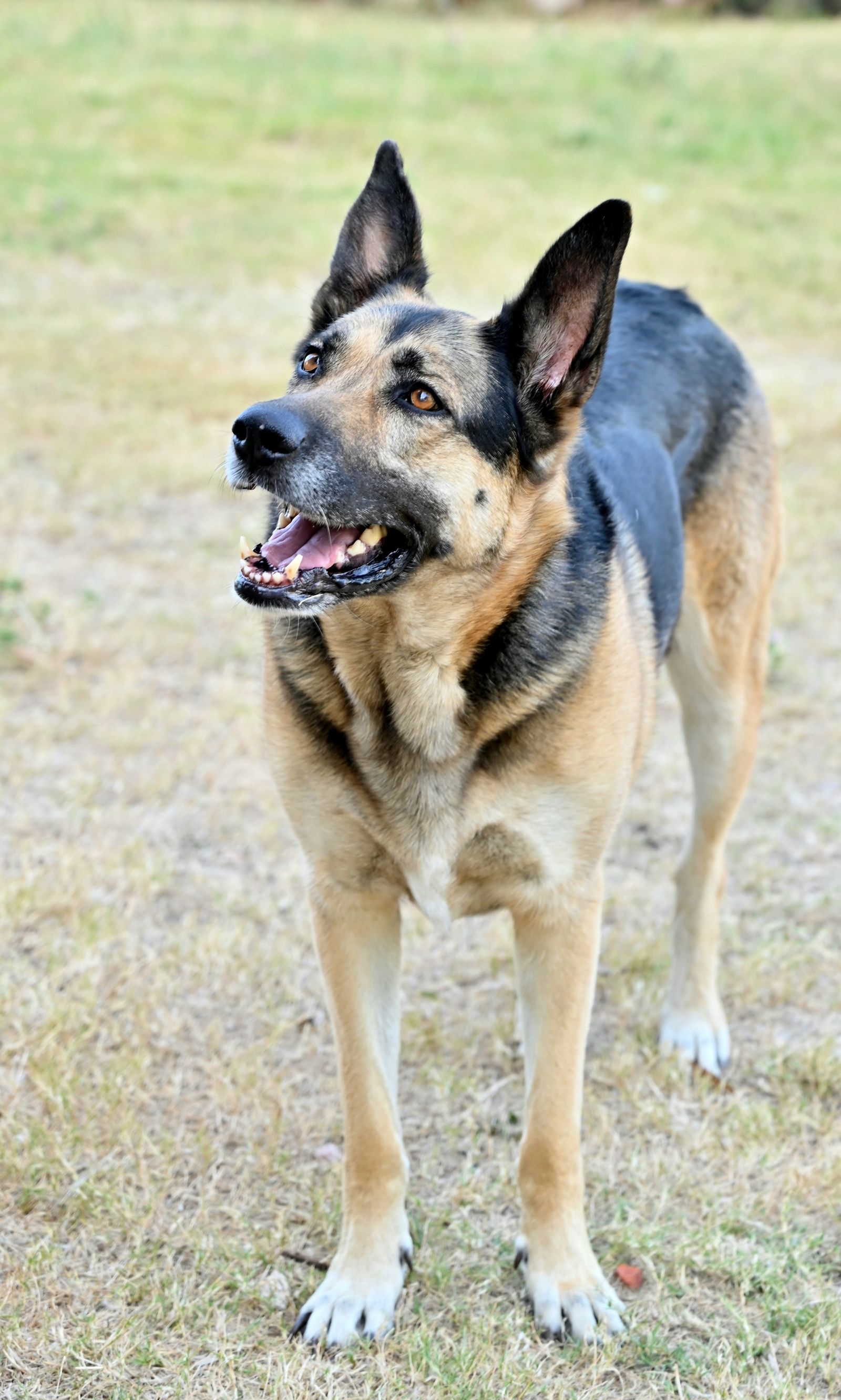
German Shepherds are one of the hardest breeds to buy gear for, and the reason is not obvious: there is no single German Shepherd size.
A working-line female might be 50 lb and lean. An oversized show-line male can be 95 lb and considerably broader. Both are German Shepherds, both are “large dogs”, and they take different sizes in almost everything. That is why a size chart that says “German Shepherd: large” is useless, and why so much gear bought for this breed ends up returned.
The actual ranges
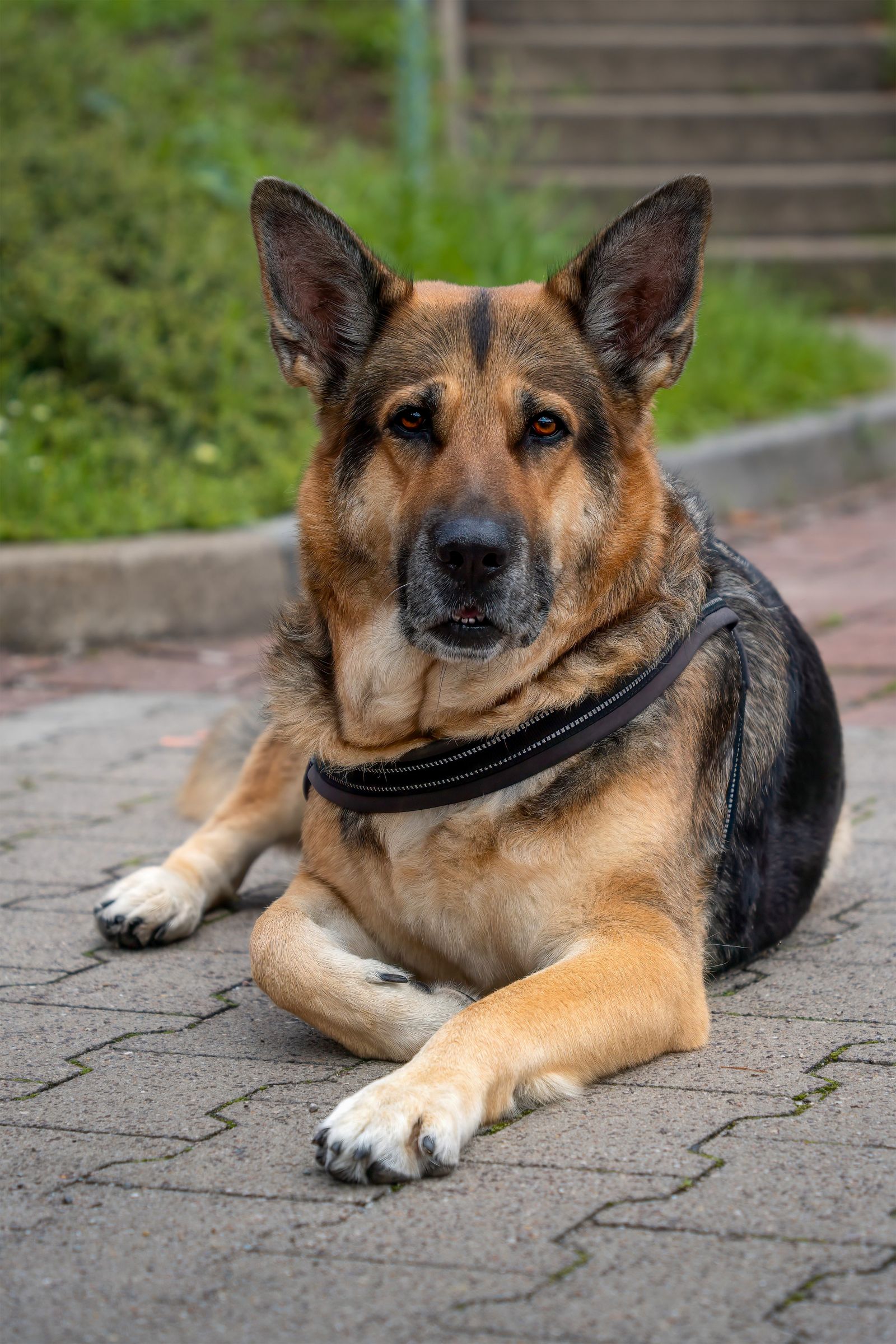
The AKC breed standard puts it at:
| Height at the shoulder | Weight | |
|---|---|---|
| Males | 24–26 in | 65–90 lb |
| Females | 22–24 in | 50–70 lb |
Real dogs spread wider than that. American show lines tend to run taller and heavier; German and Czech working lines are often more compact and athletic. Plenty of pet Shepherds sit outside the standard entirely.
Which is the practical point: use these numbers to know roughly where you are, then measure your own dog. Our guide to measuring a large dog covers the five measurements that decide fit, and takes about five minutes.
Lines, and why they change the answer
“German Shepherd” covers several distinct breeding traditions, and they do not produce the same dog.
- American show lines tend to be taller and longer, often with a more sloped topline. Frequently the largest of the three.
- German show lines are typically more substantial through the body — blockier, heavier boned.
- Working lines (German, Czech, Belgian-influenced) are usually more compact and athletic, built for endurance rather than size. Often the leanest, and frequently the ones whose owners are surprised that a “large” harness swims on them.
Most pet Shepherds are a mix of these, and plenty come from lines nobody recorded. It is not worth agonising over — but it explains why two dogs of the same breed, age and sex can need different sizes, and why asking a Shepherd owner what size they bought is unreliable advice.
When do they stop growing?
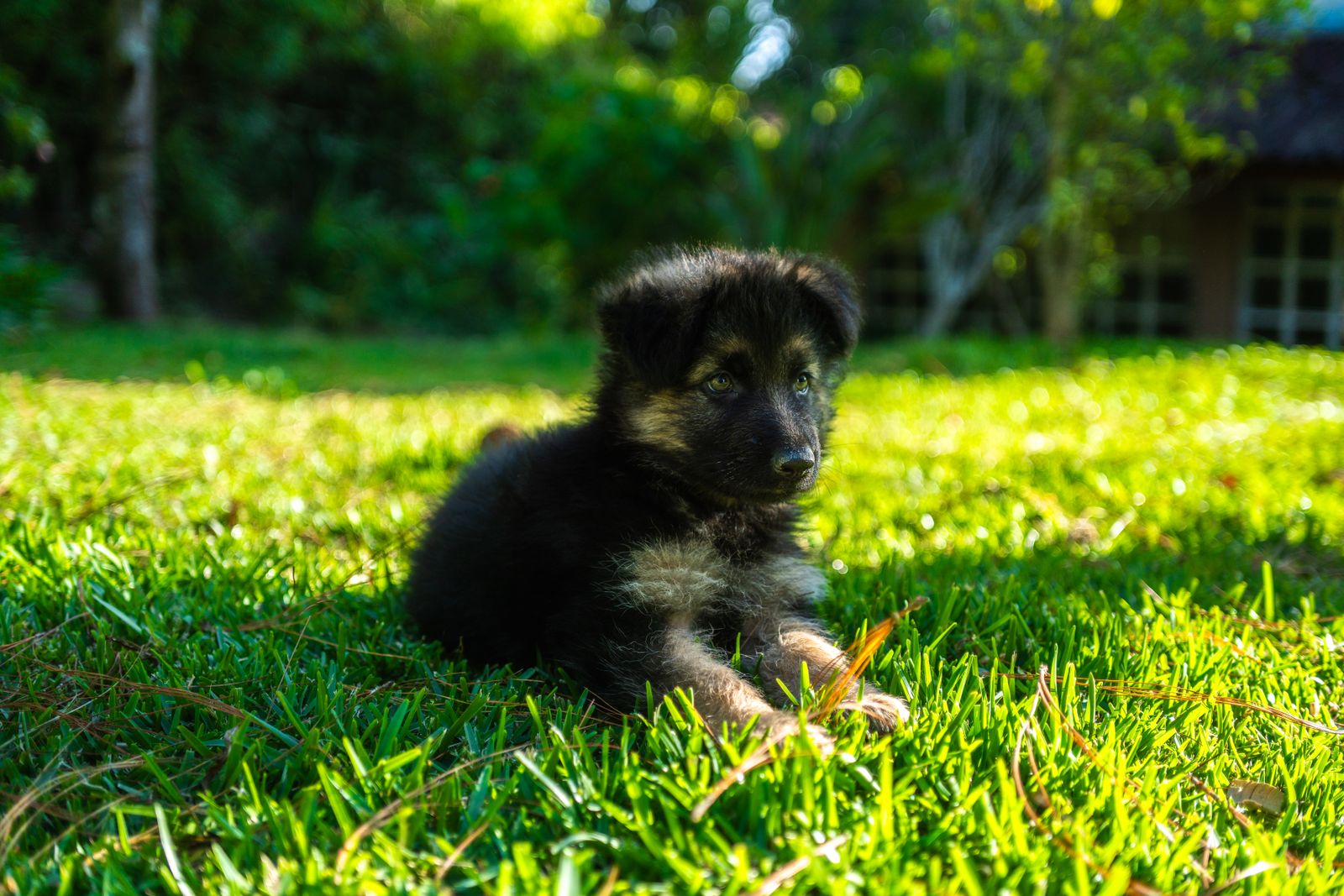
Two separate things happen, and conflating them is the most expensive sizing mistake with this breed.
Height is largely done by about 12 months. A one-year-old Shepherd is close to their adult height and can look finished.
Width is not. Chest, shoulders and overall substance keep filling in until roughly 18 to 24 months, and males in particular can still be broadening at two and a half. A harness bought at twelve months, when the dog looked adult, is routinely too tight by eighteen.
So for a growing Shepherd: buy collars and harnesses for the dog you have, expecting to replace them, and buy the crate for the adult. The crate is the item worth buying once at full size with a divider — see crate sizing by breed.
Crates: 42 or 48 inch
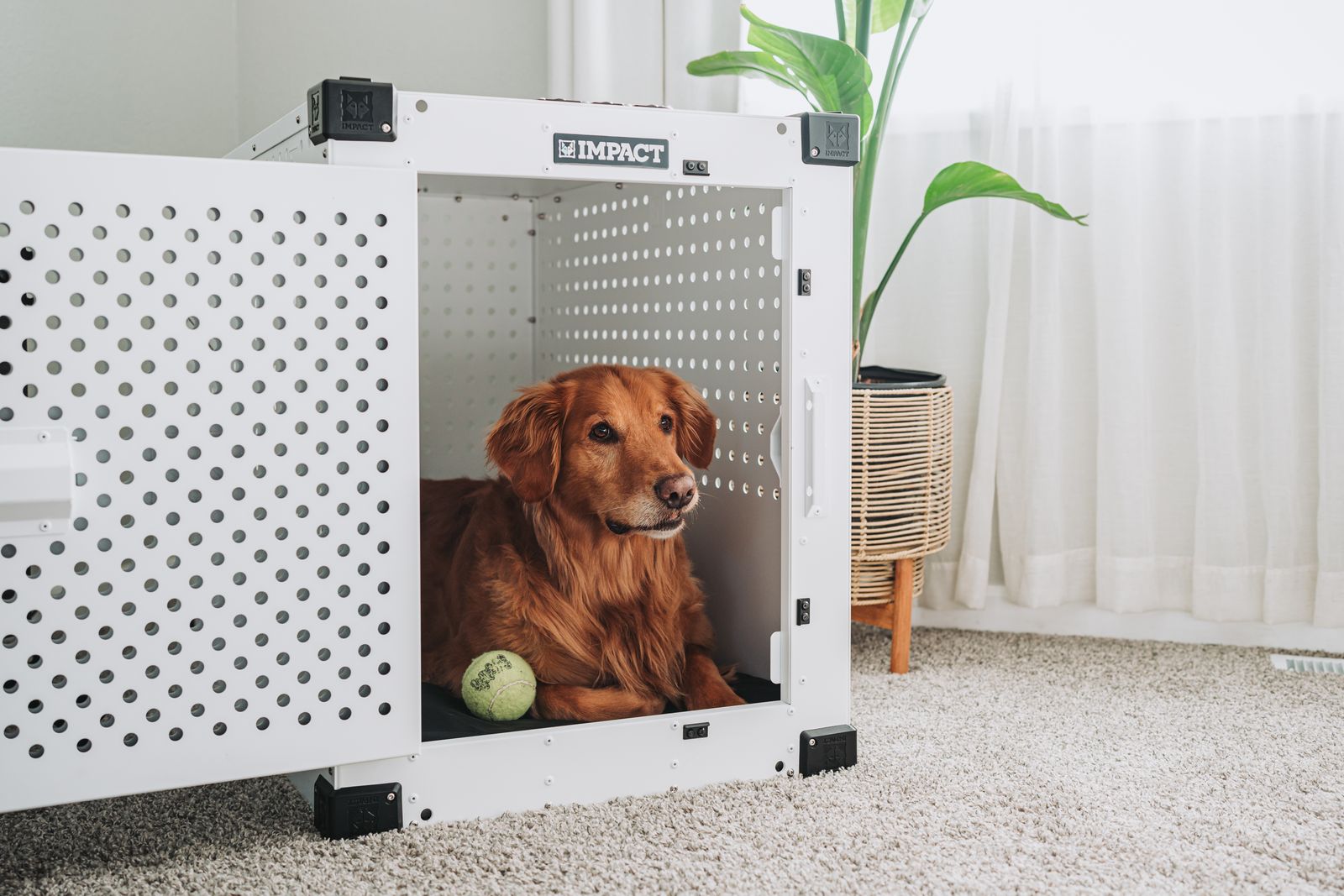
This is the most searched German Shepherd sizing question, and the honest answer is that the breed straddles the boundary.
- 42 inch suits most females and smaller males comfortably.
- 48 inch is the safer choice for a full-size male, particularly a tall or heavy-set one.
If you are between the two, size up. The cost difference is small next to buying twice, and a crate a little roomy is a far smaller problem for an adult than one where the dog cannot stand without ducking. Measure nose to tail base and add 2–4 inches, and check sitting height against the crate’s interior height rather than assuming.
Build quality matters more for this breed than for most. Shepherds are strong, intelligent and persistent, which is a bad combination for a flimsy latch — a bored Shepherd will work out a single-point catch. Our heavy duty crate guide covers gauge and latch designs.
Harnesses and collars
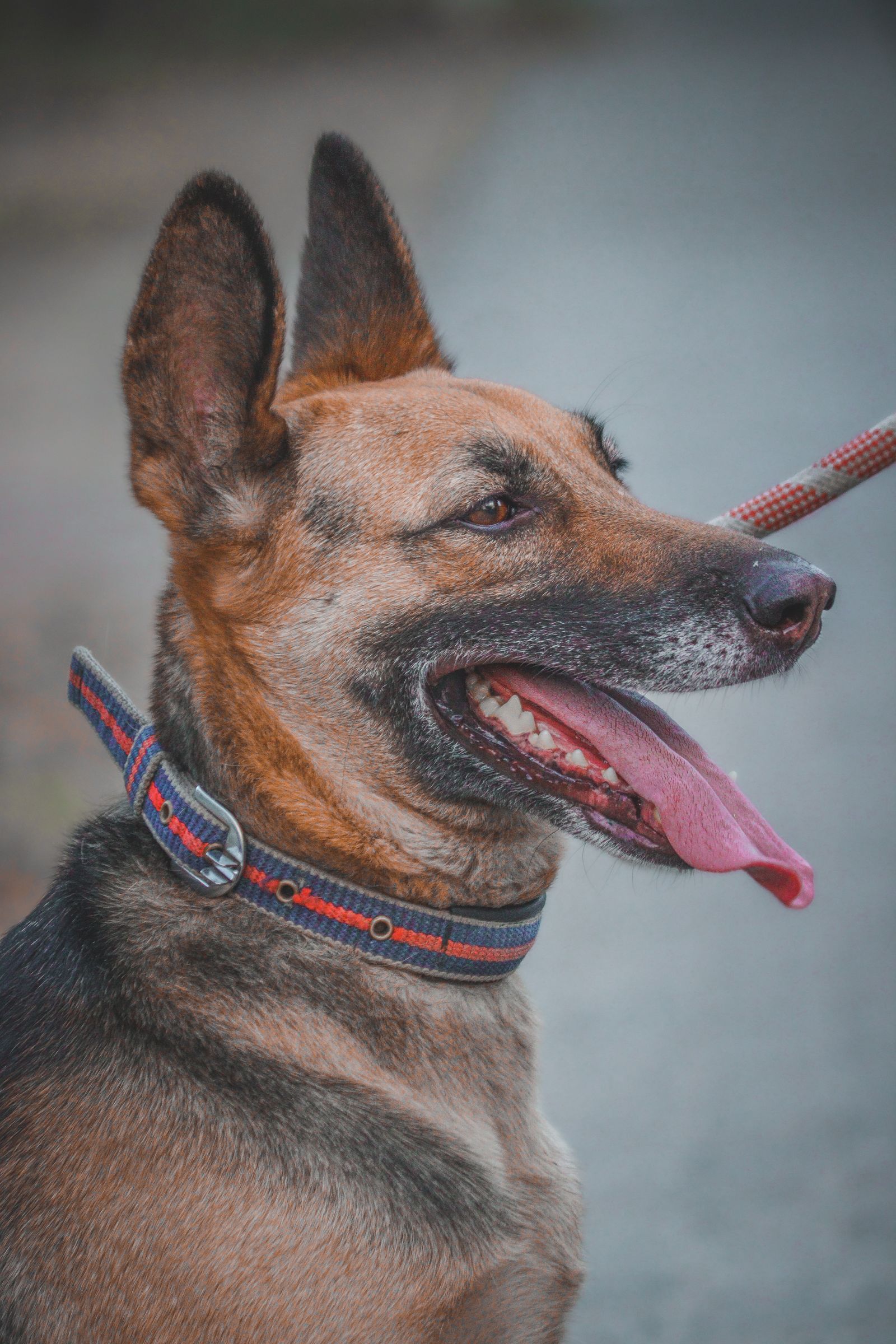
Harness sizing is by chest girth, measured just behind the front legs, not by weight. Most adult Shepherds land somewhere around 26–36 inches, but the spread within the breed is exactly why you measure.
The other consideration is strength. Shepherds are among the strongest pullers relative to their size, so hardware matters: stitched-and-bar-tacked joins rather than glued, and metal where the lead attaches. A front-clip design gives far more control over a dog who wants to be ahead of you — our no-pull harness guide covers the designs that work on a strong dog.
Collar sizing is neck girth measured low, near the shoulders, plus room for two fingers. Adults typically land in the 18–24 inch range. Width is worth attention: for a dog this strong, 1 to 1.5 inches spreads pressure better than a narrow strap. Our collar guide covers width and hardware.
The coat complicates both. German Shepherds are double-coated and shed heavily twice a year, and the difference between a full winter coat and a post-blow summer one is measurable at the neck. A collar that fits in February can be loose in May — which matters, because backing out of a loose collar is the most common way a spooked dog gets free. Re-check the fit seasonally rather than setting it once.
Beds, boots and the car
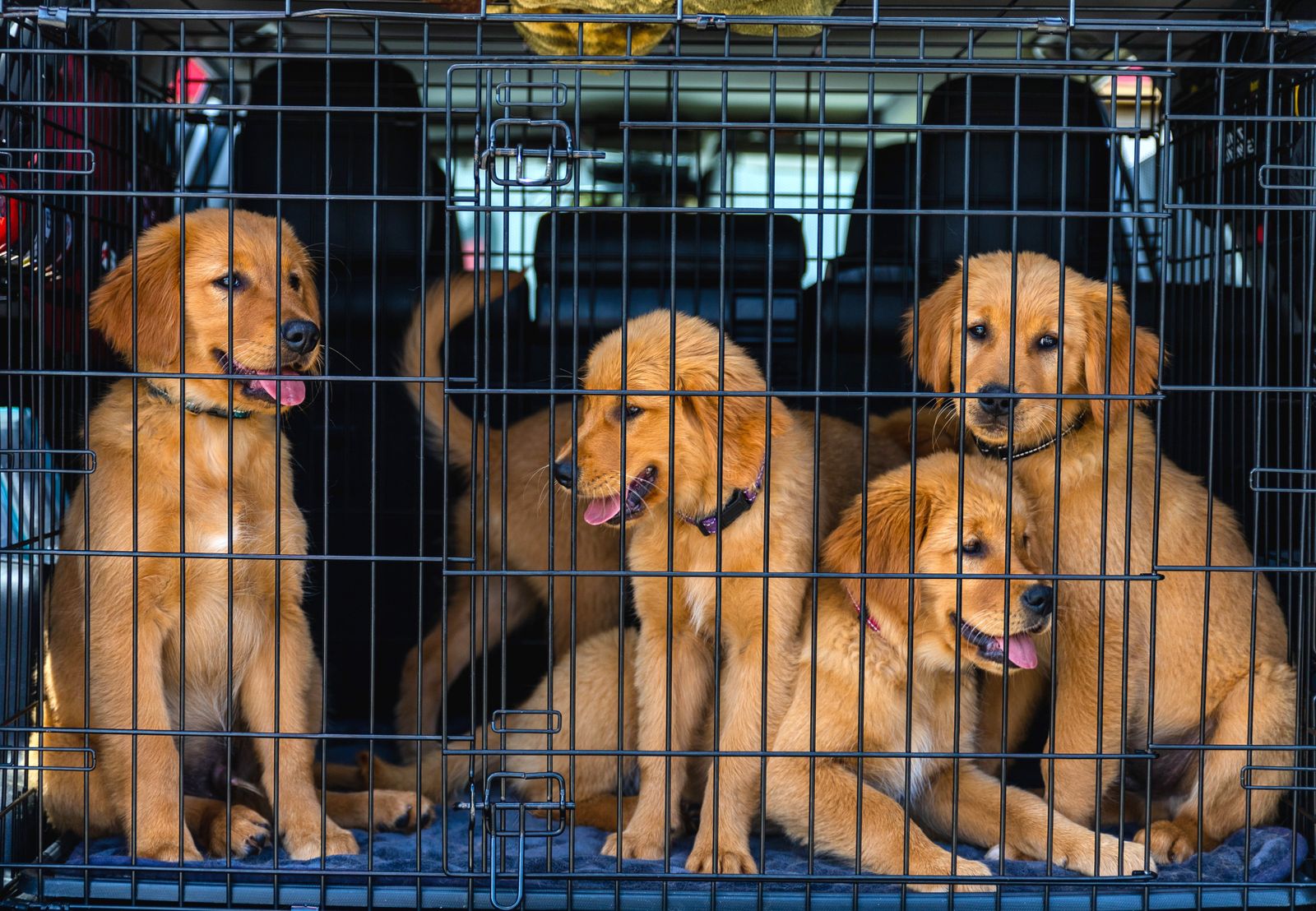
Bed: measure nose to tail base and add room to sprawl. Most adult Shepherds want something in the 42 inch class or larger. For a breed with this much hip trouble in it, foam depth matters more than surface area — a thin bed bottoms out under a 80 lb dog and offers nothing. See our orthopedic bed guide.
Boots: measure the front paw under weight, not at rest. A weight-bearing paw is noticeably wider, and boots sized to a resting measurement twist off. Our dog boot guide covers closures.
The car: nothing specific to sizing here, but worth saying — this breed sheds more than almost any other, continuously, with two heavy blowouts a year. A washable cover is less optional than it is for a short-coated dog. See our car seat cover guide.
One health note that affects what you buy
German Shepherds carry elevated risk of hip dysplasia, and it is common enough in the breed that it is worth factoring into decisions rather than treating as bad luck.
Practically, that argues for a supportive bed from the start rather than after problems appear, for a ramp instead of letting a young dog hammer in and out of a car boot, and for keeping the dog lean throughout. If you are buying a puppy, ask for hip scores on both parents — for this breed in particular it is the single most useful question you can ask a breeder.
What to buy, and when
A rough order of purchase that avoids buying most things twice:
- 8–16 weeks. A cheap, adjustable flat collar and a light harness. Both will be outgrown quickly, so spend nothing meaningful. Buy the adult-size crate now with a divider — this is the one item worth buying at full size immediately.
- 4–8 months. Second collar and harness, still mid-range. This is the fastest growth window and anything bought here has a short life. Move the crate divider as they grow.
- 12 months. Height is roughly settled. Reasonable point for a proper bed, since the length they need now is close to final.
- 18–24 months. Width has finished. Now buy the good harness and the collar you actually wanted — measure again first, because the chest will have changed since twelve months even if the dog looks identical.
The common error is doing this in reverse: an expensive harness at eight months that does not fit at eighteen, and a crate bought small that gets replaced twice.
Quick reference
| Item | Typical adult German Shepherd |
|---|---|
| Crate | 42 in (females, smaller males) / 48 in (full-size males) |
| Harness | Chest girth roughly 26–36 in |
| Collar | Neck roughly 18–24 in, 1–1.5 in wide |
| Bed | 42 in class or larger, with real foam depth |
| Boots | Front paw width, measured under weight |
Mistakes specific to this breed
- Buying by breed name. The within-breed spread is too wide for it to work.
- Sizing at twelve months. They are close to full height but still filling out for another year.
- Measuring under the coat. Measure through it, as it is now, and re-check after a shed.
- Underestimating the pull. Hardware rated for a calm 70 lb dog is not the same as hardware for a Shepherd who has seen a squirrel.
- Buying a light crate. This breed is smart and persistent enough to defeat a weak latch, and will.