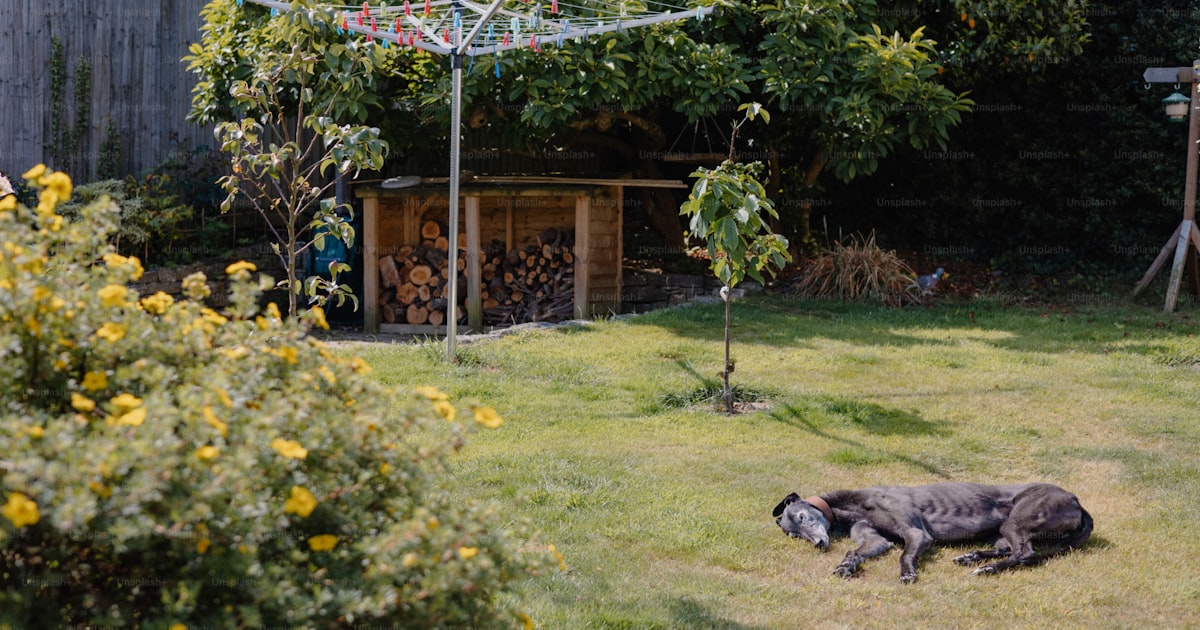
Most people size a crate by typing their dog’s breed into a search box. It is a reasonable instinct, and it is how a lot of large dogs end up in a crate they cannot stand up in — or one so cavernous that house-training quietly falls apart.
Breed is a starting point, not an answer. A working-line German Shepherd and a show-line German Shepherd can differ by several inches and twenty pounds. “Large” Labradors run anywhere from 55 to 80 lbs. The chart further down this page is genuinely useful, but it is the second step, not the first.
Measure your dog first. It takes two minutes.
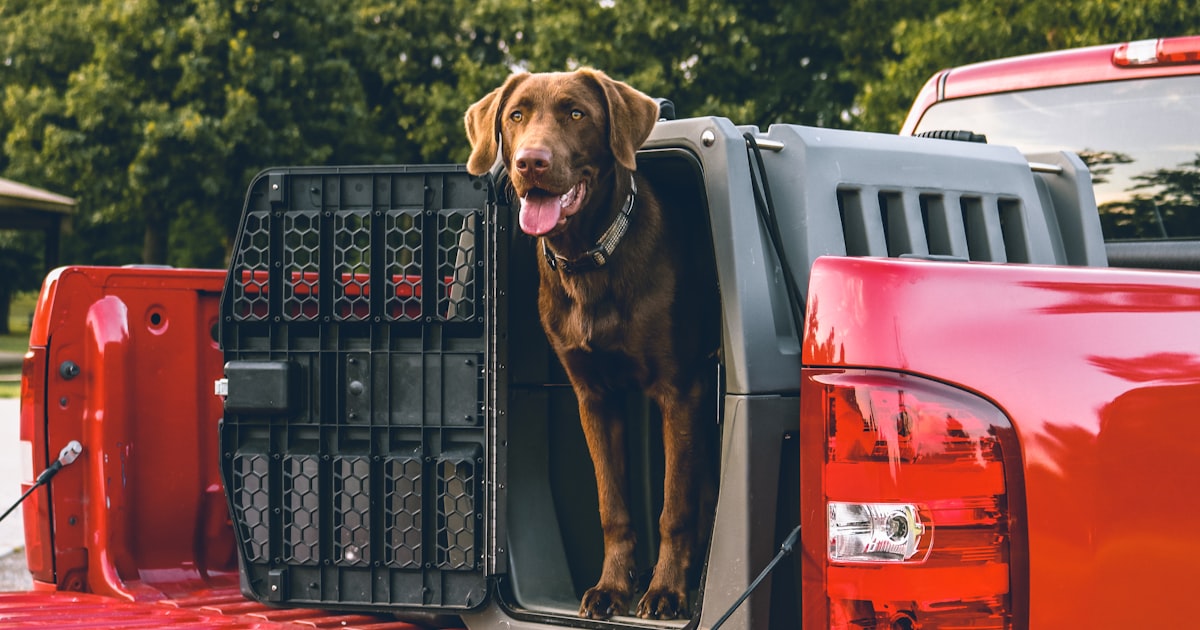
You need two numbers, and you want your dog standing normally for both.
- Length: tip of the nose to the base of the tail — where the tail joins the body, not the tip of the tail. Add 2 to 4 inches.
- Height: floor to the top of the head while sitting, which for most large breeds is taller than standing. Add 2 to 4 inches.
Those two figures are your minimum interior dimensions. Crates are sold by their length in inches — a “42-inch crate” is 42 inches long — so the length number usually decides which size you buy, and the height number tells you whether that size will actually work for a tall dog.
The 2–4 inch allowance exists so your dog can stand without ducking, turn around without scraping, and lie fully stretched out on their side. That last one is the test people forget: a dog that can only curl up is in a crate that is too small, even if it looks fine while they are sitting.
What the standard sizes actually fit

Crate manufacturers converged on a handful of lengths. For large and giant breeds, three of them matter:
| Size | Typical interior length | Rough weight range it suits |
|---|---|---|
| 42 inch | 42 in | Around 70–90 lbs |
| 48 inch | 48 in | Around 90–110 lbs |
| 54 inch | 54 in | 110 lbs and up |
Weight ranges are a sanity check, not a rule. A tall, lean dog and a stocky, compact dog of identical weight need different crates — which is why the measurement comes first. Height is where weight-based guidance goes most wrong: a deep-chested, long-legged dog can sit well above what their weight suggests.
Starting points by breed
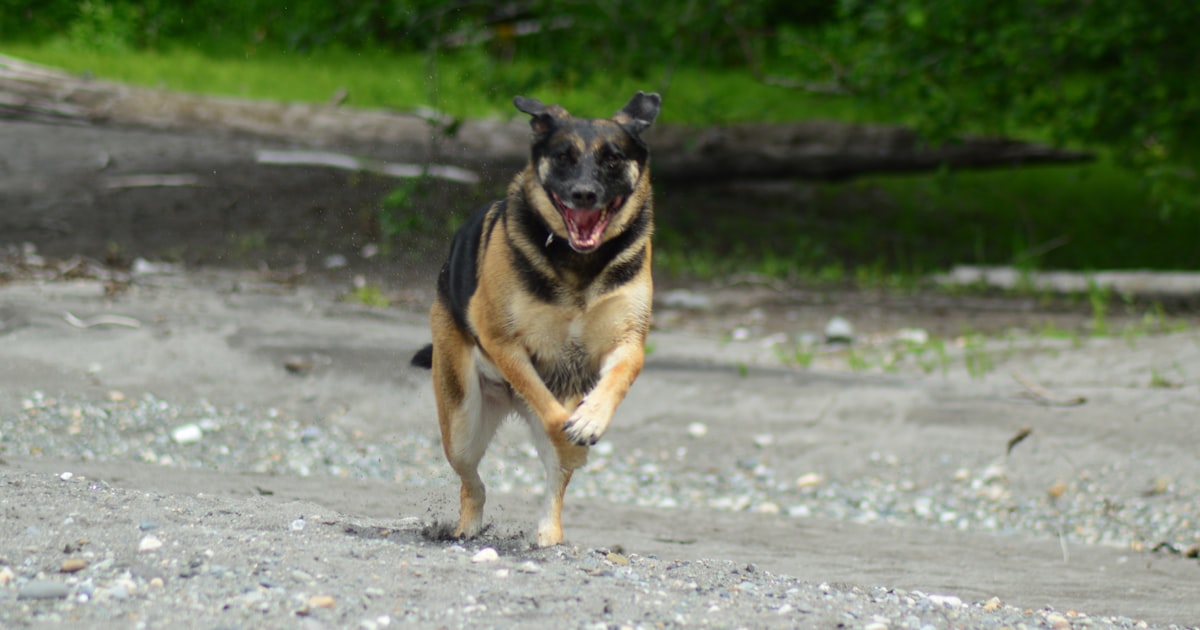
Use this to narrow the choice, then confirm against your own measurements.
| Breed | Typical starting size |
|---|---|
| Labrador Retriever | 42 in |
| Golden Retriever | 42 in |
| Boxer | 42 in |
| Siberian Husky | 42 in |
| Standard Poodle | 42 in |
| Weimaraner | 42 in |
| German Shepherd | 42–48 in |
| Doberman Pinscher | 42–48 in |
| Rottweiler | 48 in |
| Bernese Mountain Dog | 48 in |
| Great Dane | 54 in |
| Mastiff | 54 in |
| Newfoundland | 54 in |
| Saint Bernard | 54 in |
German Shepherds sit on a boundary for a reason. A 65 lb female often fits a 42 comfortably; a 90 lb male from working lines usually does not. If your Shepherd is at the larger end, or you are not sure, size up — the price gap between a 42 and a 48 is small next to the cost of replacing the wrong crate.
Giant breeds: height is the constraint, not length

For Danes, Mastiffs, Newfoundlands and Saint Bernards, the 54-inch length is rarely the problem. Standing height is. A Great Dane that has to lower their head to stand will avoid the crate, and you will conclude they “hate crates” when in fact they cannot use the one you bought.
Check the interior height specification, not just the length, and measure your dog sitting. This is also the size class where build quality stops being optional: a giant breed leaning on a panel applies force that lightweight wire simply does not survive. Our heavy duty crate guide covers steel gauge and latch design, which is what separates a crate that holds from one that gets peeled open.
Too big is a real problem, not a kindness
It feels generous to buy extra room. For an adult dog who is already house-trained, a roomier crate is mostly harmless. For a puppy, it undermines the one thing crate training depends on.
Crate training works because dogs are reluctant to soil where they sleep. Give a puppy a crate with enough spare room to use one end as a bathroom and sleep at the other, and that instinct stops doing any work for you. Progress stalls, and it looks like the puppy is failing when it is the crate that is wrong.
The fix is a divider panel. Buy the crate your dog will need as an adult, then partition it down to the space they need now and move the divider as they grow. Most large-breed crates include one — check before you buy, because sourcing a missing divider later is more annoying than it should be.
When a crate is the wrong tool
Crates are for rest, travel, recovery and house-training. They are not a place to leave a dog for a full working day. If what you need is somewhere safe for a large dog to spend several hours with room to move, a pen is the better answer — more floor space, no ceiling, far less confining. Our large dog playpen guide covers panel height and whether the locks hold against a determined dog.
For an older dog the calculation changes again. Arthritic dogs struggle to rise on a bare crate floor, and a crate that was fine at five can be a problem at ten. What changes as a large dog ages covers footing, joints and the rest of it.
What goes on the floor matters more than you would think
A bare plastic or wire pan is cold, hard and loud. For a heavy dog it is also unforgiving on elbows and hips — pressure sores on elbows are common in big dogs that sleep on hard surfaces. Whatever crate you land on, budget for something to go inside it. Our chew-proof crate pad guide covers which fabrics survive a determined chewer, since that is the failure mode most pads hit first.
Common questions
How long can a large dog stay in a crate?
Far less time than most crate marketing implies. A general guide for adults is up to four hours at a stretch during the day, and overnight once they are settled and house-trained. Puppies need far shorter stints — roughly one hour per month of age, up to a maximum of around four. A dog crated all day will show it, usually as stiffness, frustration or destructive behaviour when released. If your working day needs covering, that is a pen or a dog walker problem, not a crate-size problem.
Wire or plastic for a large dog?
Wire for home use: better airflow, it folds flat, most models include a divider, and you can see your dog. Plastic for travel, where an enclosed shell is required by most airlines and feels more secure in a car. For a large or giant breed the more important variable is not the material but the gauge and the latch — a thin wire crate and a heavy-duty one look similar in a listing photo and behave nothing alike.
My dog opens the latch. Is that a sizing problem?
No, and sizing up will not fix it. A dog that has learned to work a single-point catch needs a different latch design, not more room — usually a slide-bolt or a dual-lock. This is the most common reason people replace a crate they bought only months earlier.
The short version
- Measure nose to tail base, and floor to head while sitting. Add 2–4 inches to each.
- Use the breed chart to narrow it down, then confirm against your numbers.
- Between sizes, size up — unless you have a puppy, in which case buy adult-size and use the divider.
- For giant breeds, check interior height, not just length.
- Budget for a pad. A bare crate pan is hard on a heavy dog.
Once you know the size, our heavy duty crate guide covers which models actually hold up: escape-proofing, steel gauge, and the latch designs that matter for a dog who has learned to work a standard catch.