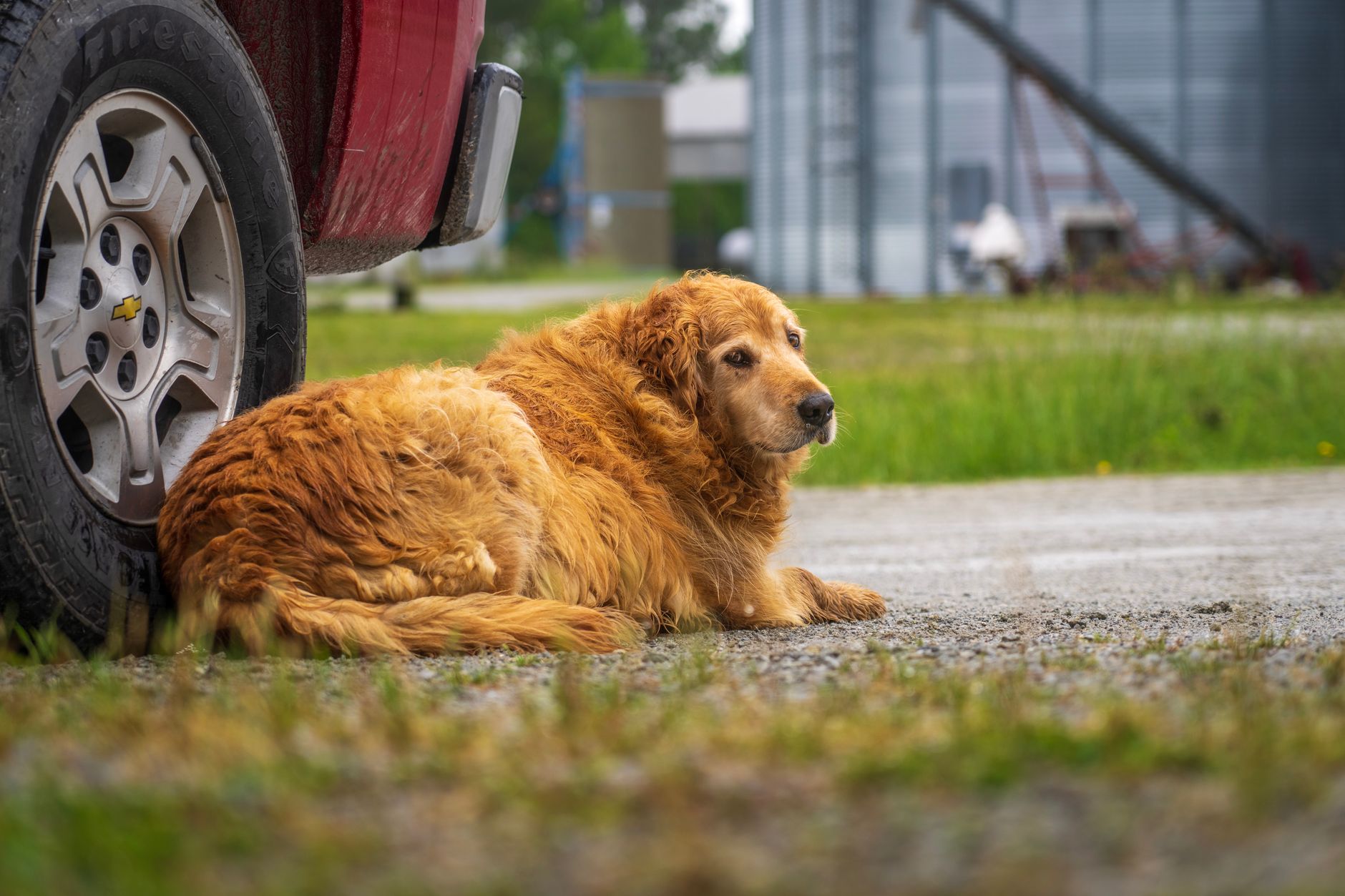
Arthritis in large dogs is rarely noticed when it starts. It is noticed when a dog stops doing something — jumping into the car, taking the stairs, getting up to greet you at the door. By then it has usually been developing for a long time.
That delay matters, because the things that help most work best early. This is about recognising it sooner, and separating what the evidence actually supports from what simply gets sold.
One thing to be clear about up front: arthritis is a veterinary diagnosis and its treatment is veterinary work. Nothing here replaces that. What follows is about spotting it and supporting a dog alongside proper treatment, not instead of it.
Why large breeds get it earlier
Osteoarthritis is joint cartilage wearing down faster than it can maintain itself. Several things stack the odds against big dogs at once:
- Load. A 100 lb dog puts far more force through the same joint surfaces than a 20 lb one, every step, for years.
- Growth rate. Large breeds do most of their growing fast, and joints that develop under that pace are more vulnerable to irregularities that cause wear later.
- Hip and elbow dysplasia. Both are disproportionately common in large and giant breeds, and both lead to arthritis in the affected joint.
- Previous injury. A cruciate tear or a badly healed knock changes how a joint loads, and arthritis follows in that joint years later.
The practical consequence: in a large breed, stiffness at seven is not automatically “just age”. It is worth investigating.
The early signs owners miss
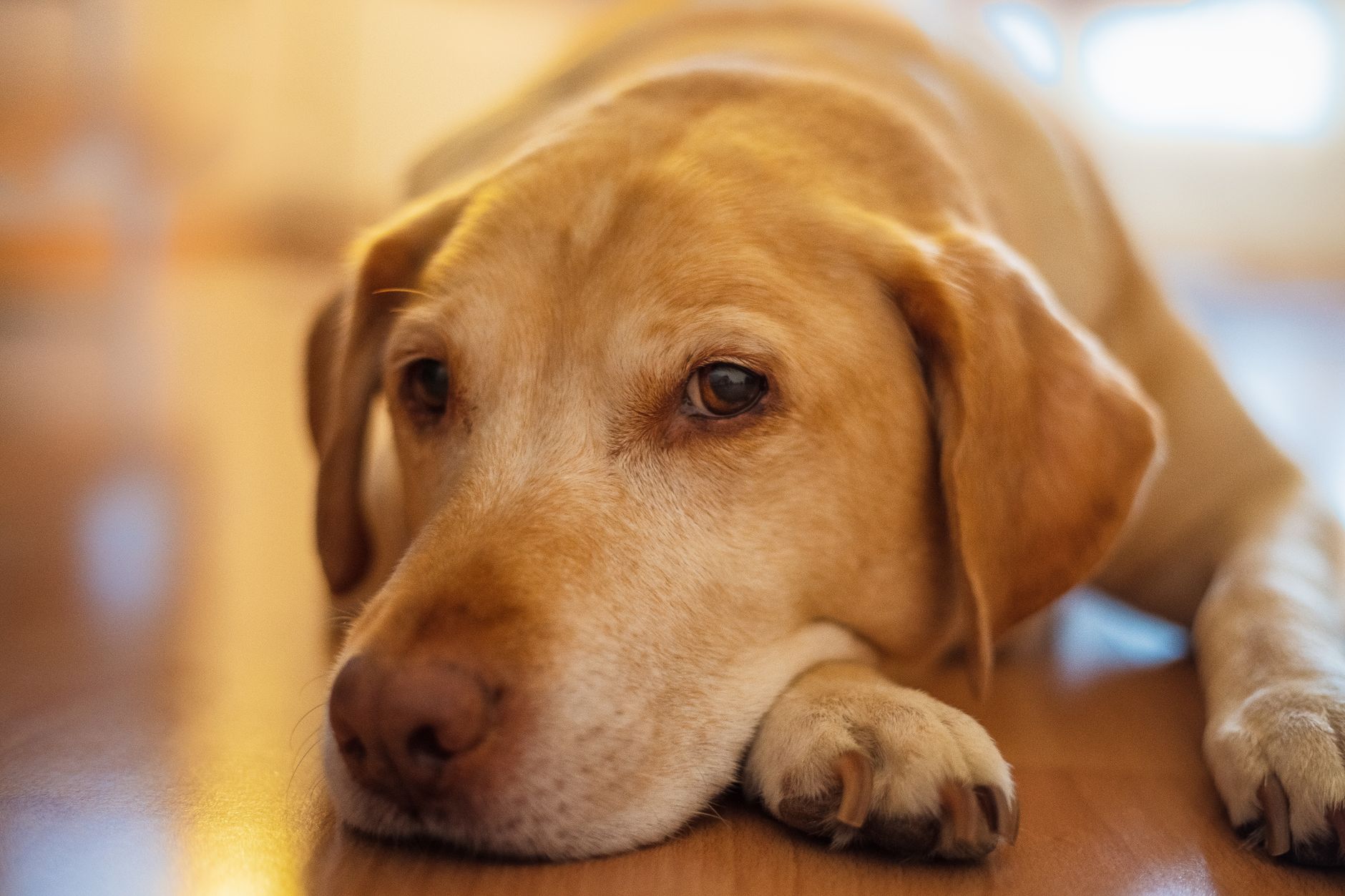
Limping is a late sign. Dogs are good at hiding discomfort and will redistribute load long before they visibly favour a leg. These come first:
- Slow to rise, especially after sleeping, and especially on a hard floor. Watch the first thirty seconds after they stand, not the walk afterwards.
- Hesitation before jumping — a pause at the car boot or the sofa that was not there a year ago. Dogs pause before things that hurt.
- Shorter walks by choice. Turning for home earlier, or lagging on the return leg.
- Changed sleeping position. A dog that always sprawled and now curls, or one that has quietly stopped using a favourite spot.
- Licking one joint. Persistent attention to a specific elbow, hip or knee is worth mentioning to a vet.
- Being less tolerant. Grumbling when touched in a particular place, or less patience with a younger dog, is often pain rather than temperament.
- Slipping more on smooth floors. Weakening hindquarters and sore joints both show up first on laminate and tile.
Any one of these on its own means little. Two or three together, in a dog over about six, is worth a conversation with your vet.
What a vet can do that you cannot
This is the part that gets skipped in favour of buying something, and it is the part that matters most.
A vet can examine the joint, take imaging if it is warranted, rule out the other things that look like arthritis — and there are several, some of them serious — and prescribe actual pain relief. Effective anti-inflammatories for dogs are prescription-only, monitored medications. They are the single biggest difference you can make to a painful dog, and you cannot buy them.
Never give a dog human anti-inflammatories. Ibuprofen and paracetamol/acetaminophen are toxic to dogs, and the doses that cause serious harm are small. This is a common and genuinely dangerous mistake. If your dog is in pain, that is a call to the vet, not a trip to the medicine cabinet.
Weight is the intervention with the best evidence
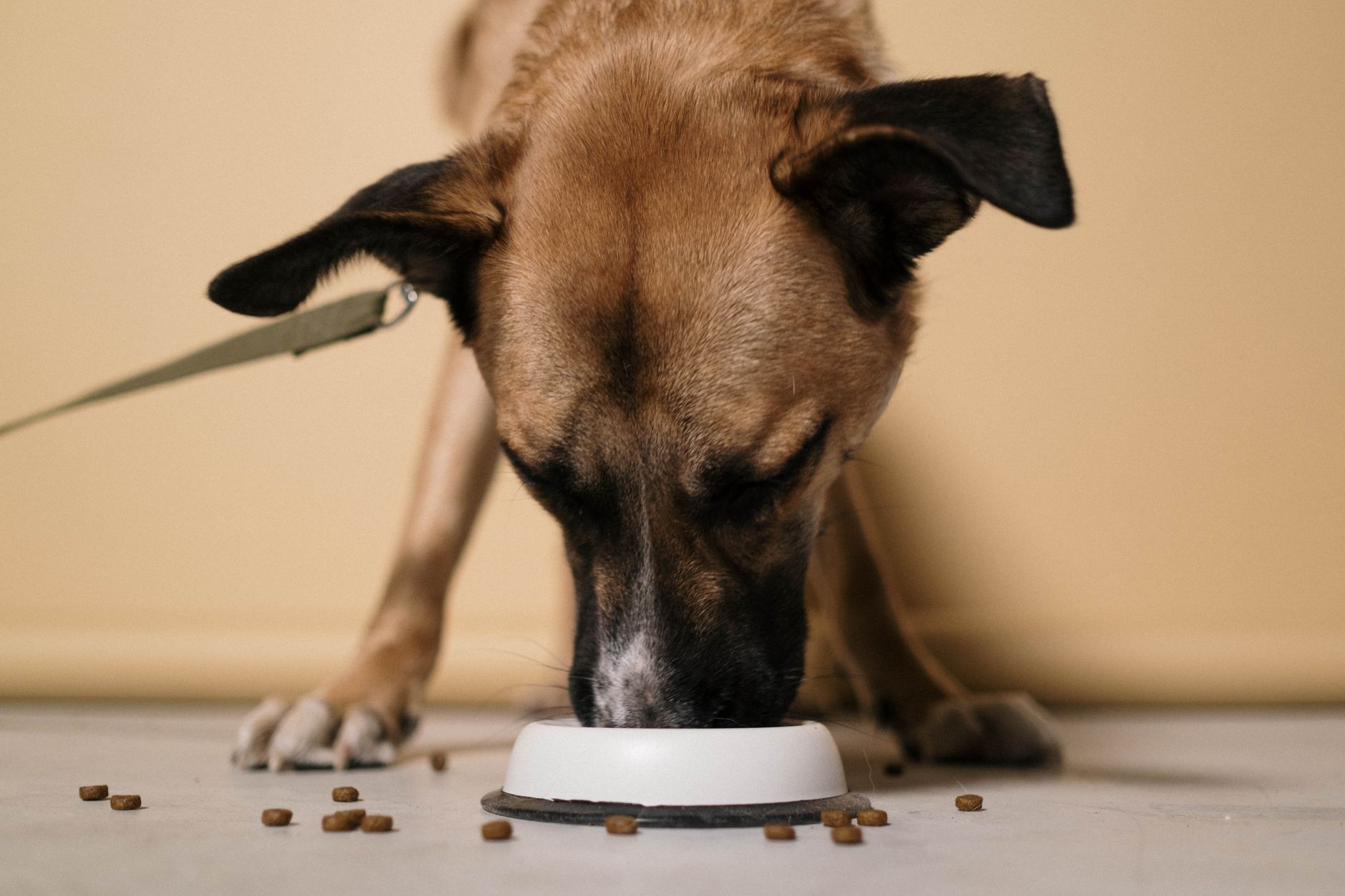
Of everything an owner controls, keeping a dog lean has the strongest support behind it. Excess weight increases the load through already-compromised joints and contributes to inflammation, and weight reduction in overweight arthritic dogs is consistently associated with improved mobility.
It is also the least commercial answer, which is probably why it gets less attention than supplements.
The practical test is touch, not the scales: you should be able to feel your dog’s ribs easily under a thin layer, and see a waist from above. Large breeds hide weight well under a coat, and the drift upward is slow enough to miss. If your dog is carrying extra, ask your vet for a target and a feeding amount — guessing at portions is how it happened. Our large breed food guide covers how to read what is actually in the bag.
Keep them moving — but change how

The instinct is rest. For arthritis, that is usually wrong. Joints depend on movement for circulation, and muscle loss around an unsupported joint makes everything worse. Dogs rested into inactivity tend to decline faster.
What changes is the shape of the exercise:
- Little and often beats one long walk. Three short ones are easier on a sore joint than a single hour.
- Consistent, not occasional. The weekend hike after five quiet days is the pattern that causes flare-ups.
- Low impact where possible. Swimming and walking in shallow water carry a dog’s weight while the muscles still work, which is exactly what an arthritic joint needs.
- Soft, even ground. Grass over pavement, and avoid deep sand or anything that twists the joint.
- Skip the repetitive impact. Fetch on hard ground and hard braking turns are high-load activities most arthritic dogs should do less of.
For a dog that cannot manage the distance any more but still wants the outing, a stroller is worth considering — and is less absurd than it sounds for a dog whose mind is fine and whose joints are not.
What you can change at home
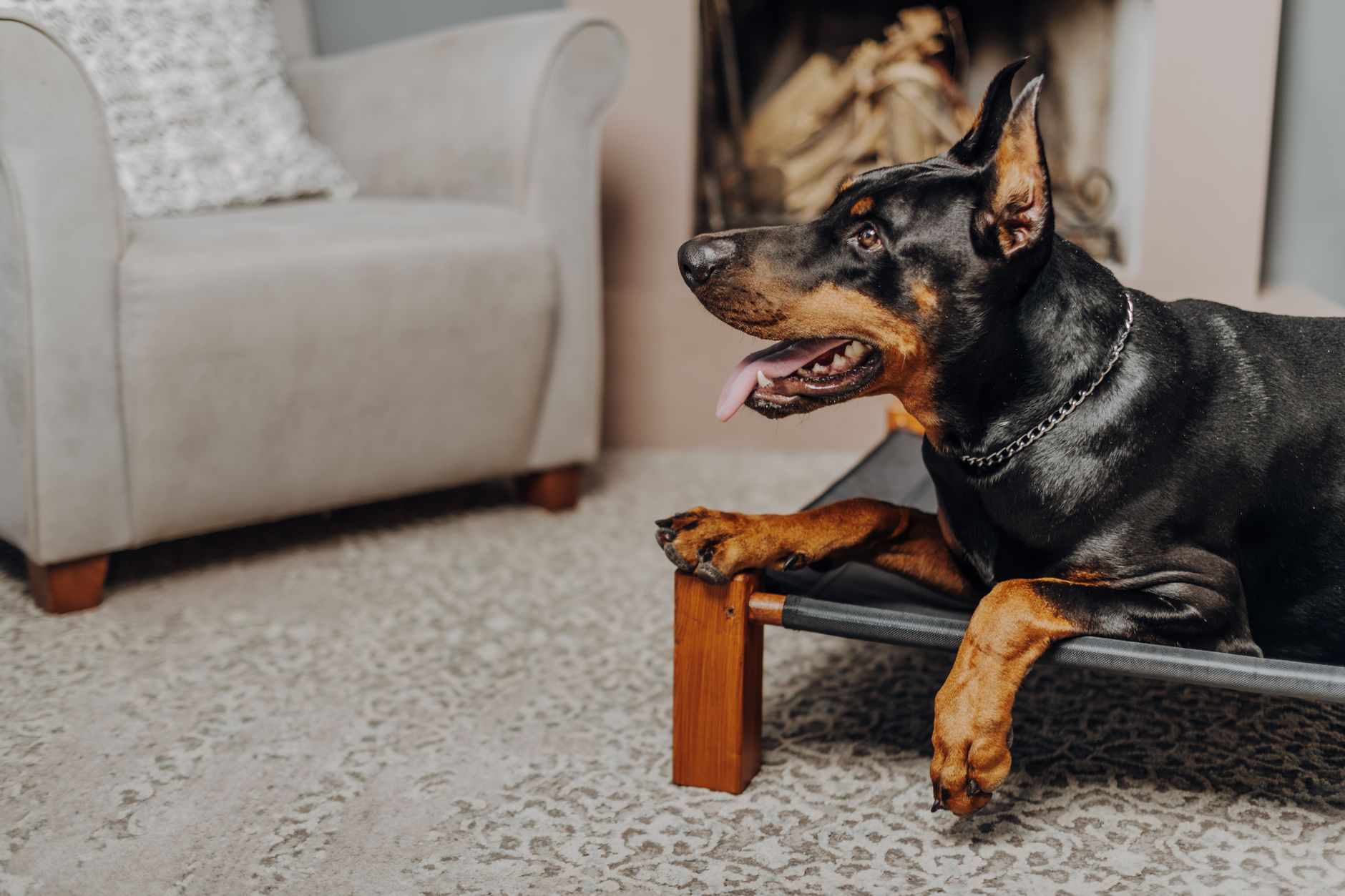
Three environmental changes do more than most products:
The sleeping surface. A dog with sore joints on a thin bed or a hard floor stiffens overnight and struggles more in the morning. Genuine orthopedic foam of adequate depth distributes weight rather than bottoming out under it — and for a heavy dog, depth matters more than surface area. Our orthopedic bed guide covers foam depth and sizing.
Footing. Smooth floors are a real problem for an arthritic dog: the splaying and scrabbling to stay upright loads exactly the joints that hurt, and the fear of slipping makes some dogs reluctant to move at all. Runners and rugs along the routes your dog actually uses — bed to door, door to food — change daily life more than most purchases.
Remove the jumps. In and out of the car is usually the highest-impact thing an arthritic dog does all day. A ramp removes it. Keep the incline shallow; a steep ramp is one an arthritic dog will refuse, and a refused ramp helps nobody.
Raising the food bowl is often suggested too. It can be more comfortable for a dog that finds bending down painful — our elevated bowl guide covers height by shoulder measurement, and is honest about what the bloat research does and does not show.
Supplements: honest about the evidence

Joint supplements are the biggest category in this space and the one with the least settled evidence. Glucosamine and chondroitin have been studied extensively with mixed results — some trials show modest benefit, others none. Omega-3 fatty acids from fish oil have somewhat better support for their anti-inflammatory effect. Green-lipped mussel appears in a smaller body of work.
A fair summary: they may help some dogs modestly, they are generally low-risk, and they are not a substitute for weight management, appropriate exercise or prescribed pain relief. Anything marketed as a cure for arthritis is overselling.
If you do try one, tell your vet what you are giving — some interact with prescribed treatment — give it a fair trial of a couple of months, and judge it on whether your dog actually moves better. Our joint supplement guide goes through the ingredients and what each is claimed to do.
When to stop reading and call the vet
Book an appointment rather than adjusting things at home if you see:
- A limp that appears suddenly, or one that does not resolve within a couple of days
- Any non-weight-bearing on a leg — that is urgent
- Obvious pain on being touched, or a yelp on movement
- Rapid deterioration over days rather than months
- Swelling or heat around a joint
- Loss of appetite or a marked change in behaviour alongside stiffness
Sudden change is the thing to take seriously. Arthritis is slow; a fast decline usually means something else, and several of the alternatives are treatable if caught early.
The short version
- Watch for hesitation and slowness to rise, not limping — limping is late.
- Get a diagnosis. Effective pain relief is prescription-only, and never give human painkillers.
- Keep your dog lean. It is the best-supported thing you control.
- Keep them moving, in shorter and more frequent sessions on soft ground.
- Fix the sleeping surface, the footing and the jumping.
- Treat supplements as a possible modest extra, not a treatment.
For a wider view of what else changes as a big dog gets older, see what changes as a large dog ages.