
A frightened Chihuahua hides under the sofa. A frightened Rottweiler goes through a door.
Noise phobia is not worse in large dogs than small ones, but the consequences are. A panicking 100 lb dog can break out of a crate, go through a screen door, clear a fence it has never shown interest in, injure itself badly doing any of those things, and knock over anyone in the way. Fireworks night and New Year are consistently among the busiest periods of the year for lost dogs.
So it is worth taking seriously well before the next thunderstorm.
This is a real condition, and it usually gets worse
Noise phobia is a recognised veterinary behavioural condition, not disobedience and not something dogs reliably grow out of. Left alone it tends to escalate: a dog that was uneasy about fireworks at three can be genuinely phobic at seven, and the fear often generalises — starting with bangs, spreading to rain, wind, or simply the light changing before a storm.
Many dogs also detect an approaching storm well before their owners do, through pressure and static changes. If your dog seems anxious for no reason and a storm arrives an hour later, they were not being irrational.
What it looks like
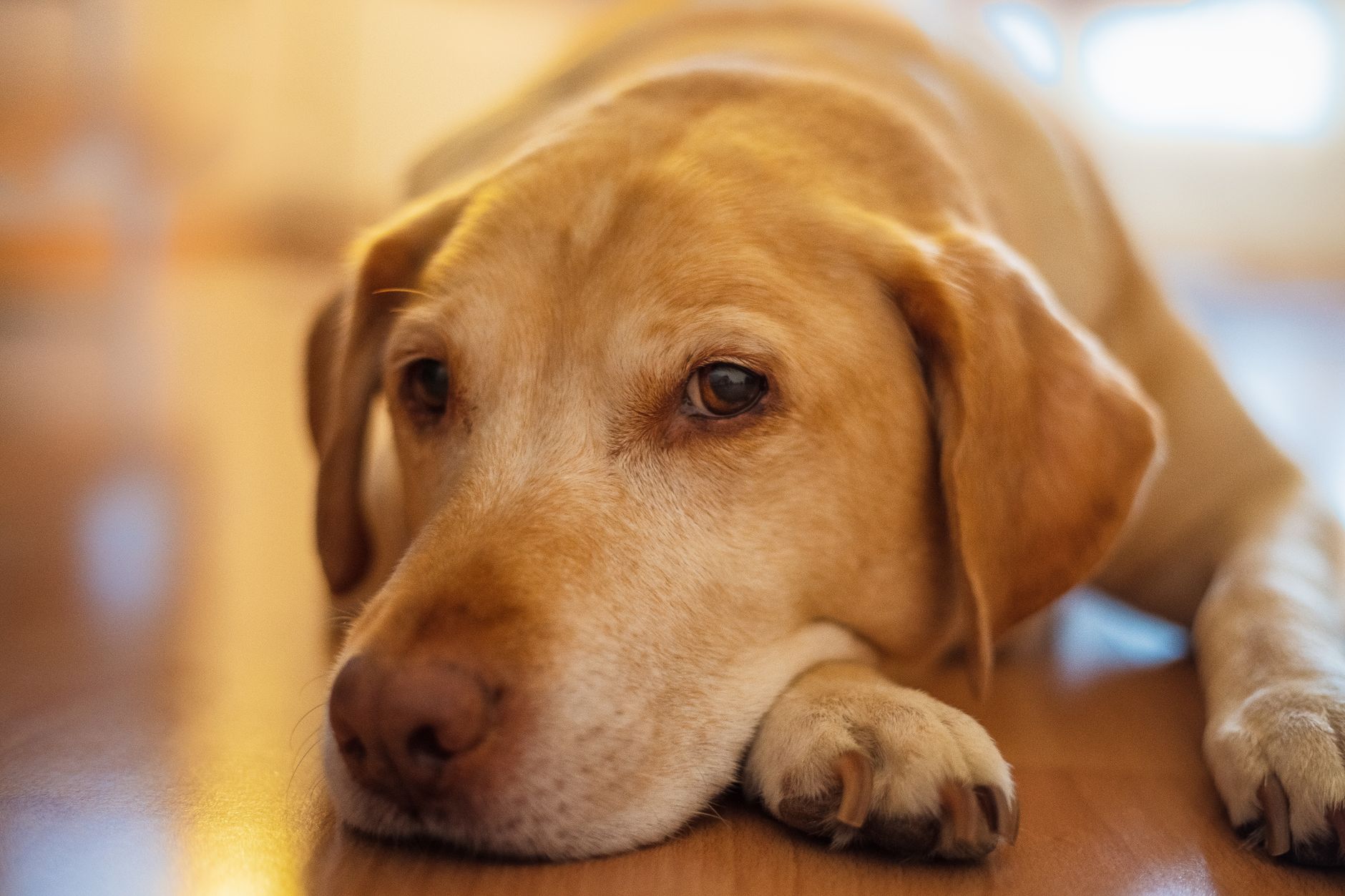
Some signs are obvious. Others get mistaken for something else entirely:
- Panting and pacing with no exertion to explain it
- Drooling noticeably more than usual
- Trembling, often alongside a tucked tail and flattened ears
- Hiding — bathrooms, behind furniture, anywhere small and enclosed
- Clinginess, or the opposite: wanting to be entirely alone
- Refusing food, including treats they would normally take
- Destructive escape attempts — digging at doors, chewing frames, scrabbling at windows. This is panic, not naughtiness, and it is where large dogs injure themselves.
- Toileting indoors in a house-trained dog
Escape attempts are the sign to act on fastest. A dog that has once broken out during a storm will try again, and the second attempt is usually more determined.
Before the noise: what actually works

Almost everything effective happens in advance. On the night itself your options are narrow.
Build a den, early. Dogs seek small enclosed spaces when frightened, so give them a good one long before they need it. An interior room with no external wall, away from windows, with familiar bedding. If your dog already likes their crate, leave it open with a blanket over it — but never shut a phobic dog in. A dog that panics in a closed crate can do itself serious damage trying to get out. The point is a refuge they choose, not confinement. Our crate guide covers builds that stand up to a large dog; the same strength that keeps a dog in also makes a bad trap for a panicking one.
Desensitisation is the intervention with the best evidence, and the one almost nobody does, because it takes months rather than minutes. Recorded storm and firework sounds, played at a volume low enough that your dog notices but stays relaxed, paired with something good, and raised very gradually over weeks. Done properly it genuinely changes the response. Started the week before New Year, it does nothing.
Exercise earlier in the day. A well-exercised dog settles more easily, and you want the walk done before the noise starts rather than during.
Mask what you can. Close windows, draw curtains — flashes matter as well as bangs — and put on something with steady broadband sound. Television or a fan works as well as anything purpose-made.
During: what to do, and one myth to drop

Comfort your dog if they want comfort. The old advice that soothing a frightened dog “reinforces the fear” is wrong. Fear is an emotional state, not a behaviour being rewarded — you cannot reinforce an emotion with attention, any more than reassuring a frightened person makes them more frightened next time. If your dog comes to you, stay calm and let them stay.
What to avoid:
- Do not punish panic, including the destructive kind. It adds fear to fear and makes the next event worse.
- Do not force exposure. Taking a terrified dog outside to show them the fireworks are harmless is flooding, and it reliably backfires.
- Do not drag them out of their hiding place. A dog under the bed is coping. Let them.
- Do not leave a phobic dog alone during a known event if you can avoid it. Most serious escapes happen in an empty house.
Pressure wraps: what they do and do not do
Snug-fitting vests apply gentle constant pressure around the torso, on the same principle as swaddling. Owner-reported results are often positive; controlled evidence is more modest and mixed, and some of the reported benefit is difficult to separate from the event simply ending.
A fair position: they are low-risk, inexpensive relative to most options, appear to help some dogs somewhat, and are not a treatment for genuine phobia. If you try one, fit matters — the effect depends on even pressure, so size it by chest girth rather than weight, and introduce it on a calm day so it is not itself novel and alarming. Our anxiety vest guide covers sizing, and how to measure a large dog covers taking the girth measurement properly.
What about the other calming products?
Two more categories come up constantly, and both deserve a straight answer.
Pheromone diffusers release a synthetic analogue of the scent a nursing mother produces. Evidence is limited and mixed. They are harmless and some owners are convinced by them; treat them as a possible small help rather than a plan.
Calming supplements — typically L-theanine, tryptophan, casein derivatives or similar — sit in the same bracket: generally safe, modest evidence, nowhere near the effect of prescribed medication for a genuinely phobic dog. Tell your vet what you are giving, because some interact with medication.
The pattern across all of these is the same. Low-risk, possibly a small help, routinely marketed as more than that. None is a reason to delay a vet visit for a dog that panics badly.
If you have a young dog, prevent it
This is the cheapest intervention on the page and it only works before there is a problem.
Puppies that meet moderate noise early, in a relaxed context and with something good happening, are far less likely to develop phobia later. Play recorded sounds quietly during meals. Carry on normally through a storm rather than fussing, because a young dog reads your reaction as information about whether the bang mattered. Do not comfort-panic at them, and equally do not force them to cope alone.
If you already own an anxious adult, this window has closed — but it is worth knowing for the next dog, and worth telling anyone who has just brought a large-breed puppy home.
When it needs a vet
If your dog panics badly, tries to escape, injures themselves, or cannot be settled at all, that is beyond what management at home will fix.
Effective anti-anxiety medication for dogs exists and is prescription-only. Some is given daily; some is situational, taken before an expected event. For a severely phobic dog it is often the difference between a distressing night and a manageable one, and it works best combined with desensitisation rather than instead of it.
Worth saying plainly: reaching for medication for a genuinely phobic dog is not a failure of training. Leaving a dog to panic through it several times a year, when something effective exists, is the worse option. Your vet can also refer to a veterinary behaviourist for cases that need more structure.
One more reason not to wait: noise sensitivity that appears or sharply worsens in an older dog can be linked to pain or cognitive change rather than the noise itself. What changes as a large dog ages covers that ground, and a new phobia in a senior dog is worth a check-up rather than a vest.
Plan for the escape you hope does not happen

Even with everything above in place, assume it might fail once.
- Check the collar and ID tag before a known event. A tag with a current phone number recovers more dogs than anything else.
- Confirm the microchip details are current. A chip registered to a phone number you had three moves ago is no use.
- Secure the garden. Gates latched, and remember a panicking dog clears heights it never would calmly.
- Consider a GPS tracker if your dog has bolted before. Fireworks night is precisely the scenario they exist for — our GPS tracker guide compares range, battery and the subscription costs.

A well-fitted collar matters here too: the most common way a frightened dog gets loose is backing out of one that was slightly too loose. Two fingers under the collar, no more — our collar guide covers fit and hardware.
The short version
- Noise phobia is a real condition and usually worsens if ignored.
- Almost everything effective happens before the event, not during.
- Build a den they can enter and leave freely. Never shut a panicking dog in.
- Desensitisation has the best evidence and needs months, so start out of season.
- Comfort your dog. You are not reinforcing the fear.
- Severe phobia needs a vet. Medication exists and works.
- Check the collar, tag and microchip before every known event.